If you have looked into managing lymphedema, you have probably run into a long list of tools: skin care, manual lymphatic drainage, compression socks or sleeves, bandaging, kinesio tape, sometimes surgery. Which one comes first? It is one of the most common questions we hear, and it matters more than most people expect. The pieces are not interchangeable, and the order they happen in is part of what keeps the work safe.
Why does the order matter at all?
Lymphedema is what happens when lymph fluid builds up in a part of the body faster than the lymphatic system can move it out. The goal of every tool on that list is the same: help the fluid travel back toward the center of the body, where it rejoins your circulation. The catch is that fluid can only go somewhere if there is room for it to go.
That is the whole reason for sequencing. If you start compressing or draining a swollen limb before you have opened the route the fluid needs to travel, you can push fluid toward a spot that is already backed up. Our founder, Sharon Vogel, teaches this as a hard line in all of her lymphatic work:
"You never push fluid toward an obstruction."
Order is how a trained therapist honors that rule. Clear the path first, then move the fluid into it. Do it in the other direction and you are working against the body instead of with it.
What is the sequence, and what is it protecting?
Sharon explains the beginning of the sequence with an image most people recognize from their own kitchen. When someone asks her about the order of all that lymphedema care, she starts here:
"The first thing you do is you belly breathe. You push the belly out during an inhale, and exhale release."
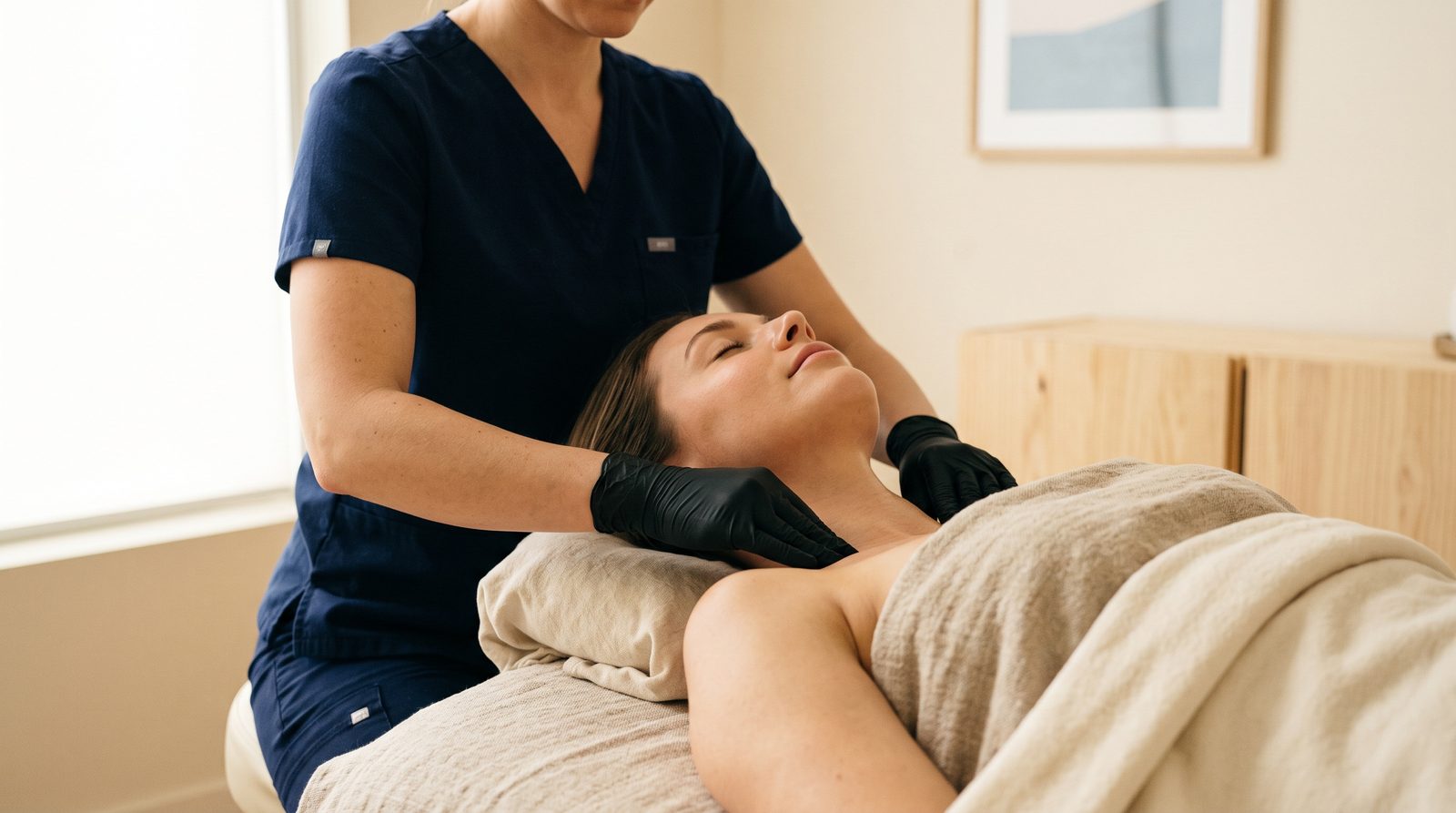
Deep belly breathing is not a warm-up for relaxation, though it does feel calming. It gently mobilizes the deepest lymphatic structures in the trunk, near where lymph empties back into the bloodstream. In other words, it starts opening the drain before anything downstream gets touched. From there, the next step works the area at the base of the neck and upper chest, the collecting point Sharon calls the terminus, because that is where fluid from the rest of the body ultimately arrives.
Her way of describing why this comes first has stuck with a lot of patients:
"If you're doing dishes and the sink is full, reach down to the drain and get those green beans out of there, so the fluid has somewhere to go."
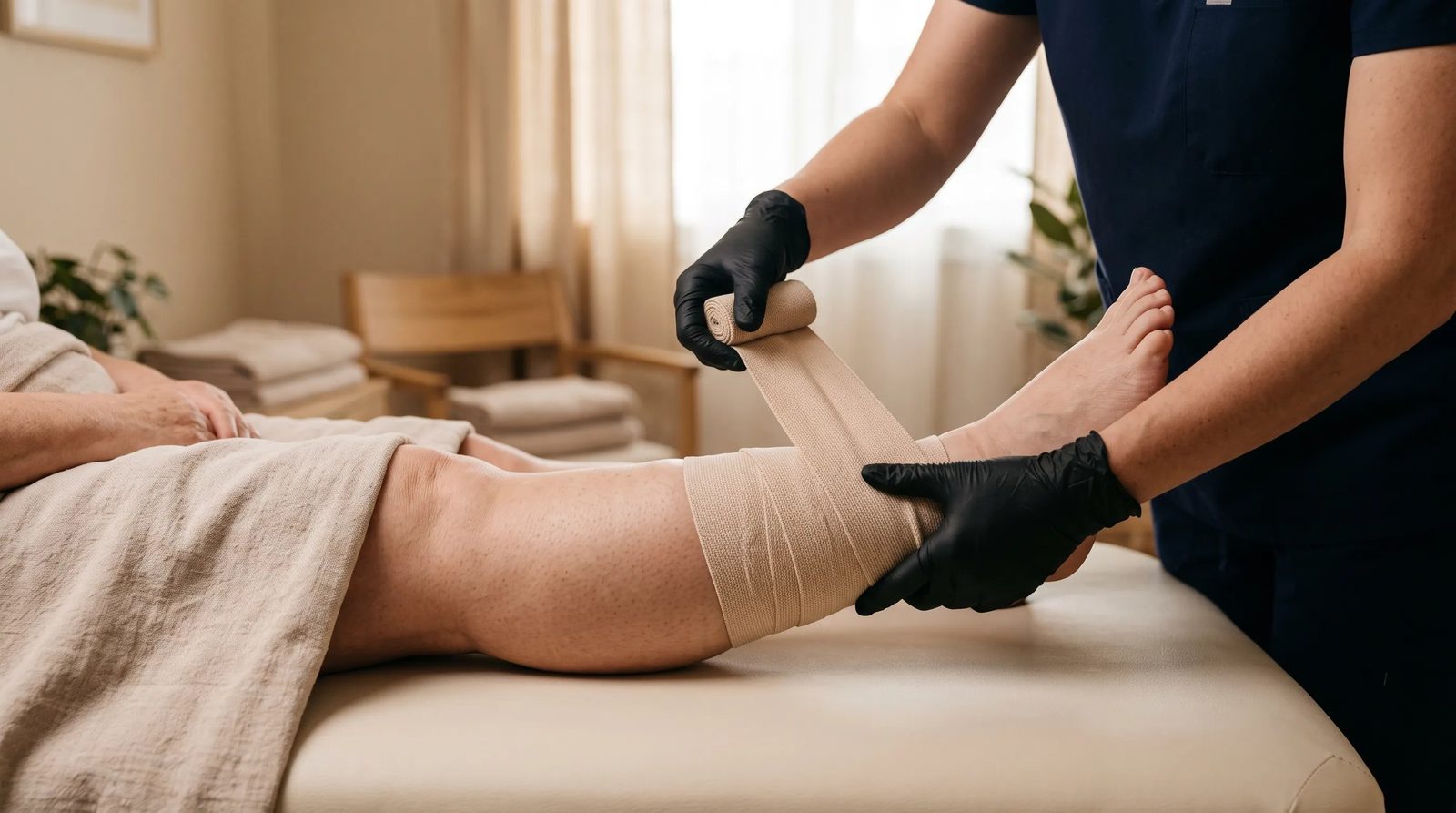
That is the entire logic of the sequence in one sentence. You clear the drain, then the water can move. Only after the central route is open does a therapist work the swelling further out on the limb, drawing that fluid toward the pathway that is now ready to receive it. Compression, bandaging, and tape come into the picture to hold and support that progress, and where they fit depends on the person. The important thing to understand is that each stage sets up the one after it. The order is doing quiet safety work the whole way through.
Can't I just follow the sequence myself at home?
This is where honesty matters more than encouragement. Understanding why the order exists is genuinely useful. It helps you follow your care, ask better questions, and notice when something feels off. Understanding it is different from performing it correctly on a real, backed-up limb.
The sequence depends on judgment that changes person to person and visit to visit: where your fluid is actually pooling, whether the route is clear enough to move it, how much pressure your tissue can take, and whether compression is even appropriate for you yet. Getting the order wrong is not a small mistake with lymphedema. It can send fluid the wrong way. That is exactly the situation a certified lymphedema therapist is trained to read and prevent, and it is why Sharon's answer to the "what is the order" question ends where it does:
"The second thing is to see a CLT, a certified lymphedema therapist."
A CLT builds the sequence around your body and adjusts it as your swelling responds. When several of these tools are combined and staged deliberately, the approach has a name, complete decongestive therapy, and the staging is the point of it. Compression is a good example of why professional judgment belongs at the front. A sleeve or garment that is helping one person can trap fluid on another if the route above it is not draining, which is one reason accurate lymphedema measurements matter before anything is fitted.
Where does this leave you?
The order of lymphedema care reflects how the lymphatic system actually moves fluid: open the central route, then work from the drain outward, and never push fluid toward a spot that cannot receive it. Belly breathing and clearing the terminus come first because they make room. Everything after that is built on the room they create.
If you are managing lymphedema, the single most useful step is the one Sharon names: see a certified lymphedema therapist who can set the sequence for your body and keep it safe as things change. Our lymphedema therapy page walks through how we assess and manage ongoing swelling, and if you want to talk through your own situation, you can tell us what is going on and we will say honestly whether this work is a fit.
You can also keep learning in our education library, where we cover how the lymphatic system works and what to expect from lymphatic care.