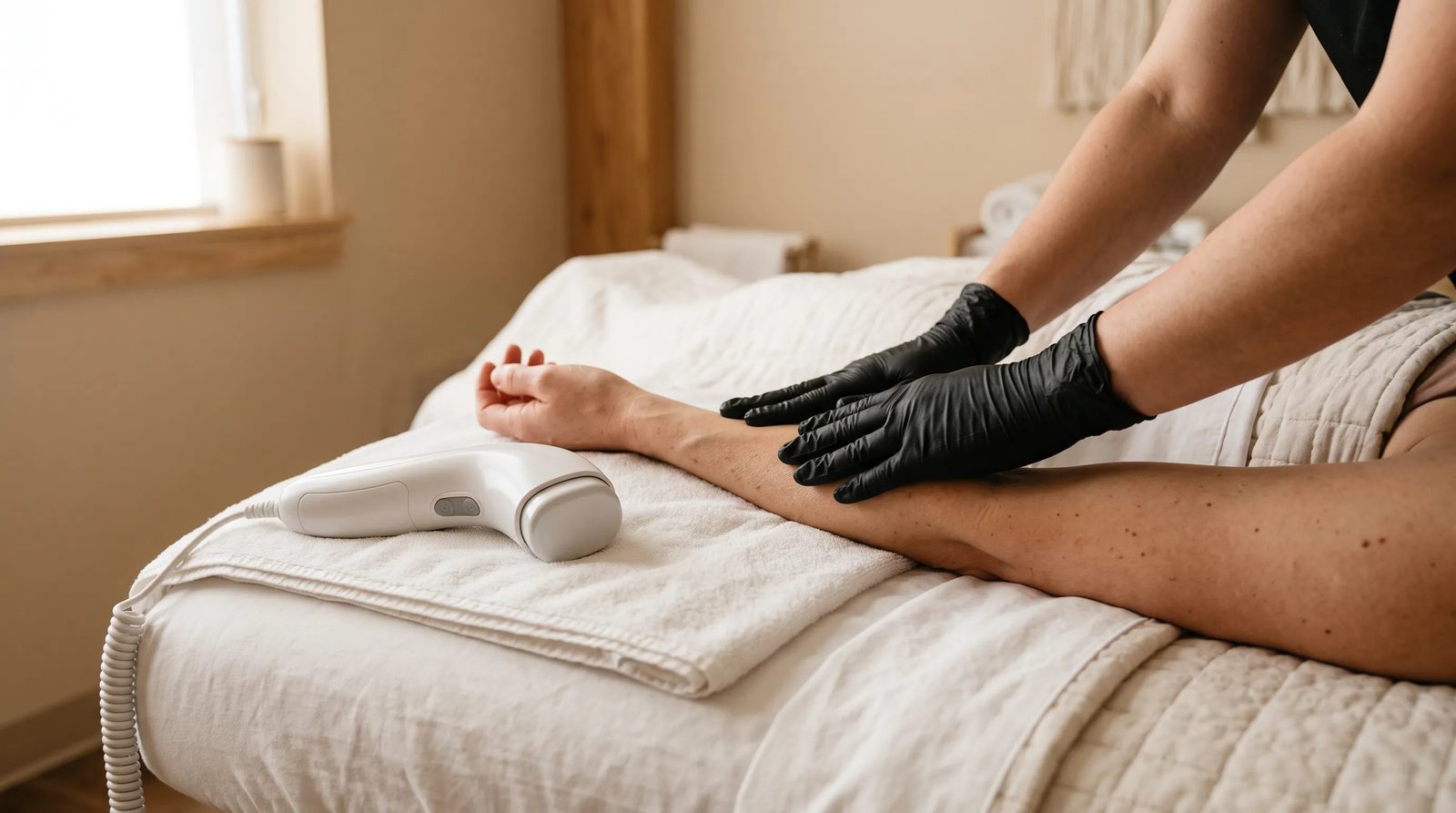
Almost everyone who calls us asks a version of the same question. Should I book the hands, or should I book the machine? People have read about lymphatic massage done by a therapist, and they have also seen devices advertised that promise to do the same thing faster. It is a fair thing to wonder about before you spend your time and money. Here is the honest answer, and it is the same answer our founder Sharon Vogel gives at the table. The hands are the foundation. Machines are tools we sometimes add to the hands. That distinction is the whole point of this article, so let us walk through it plainly.
What is manual lymphatic drainage?
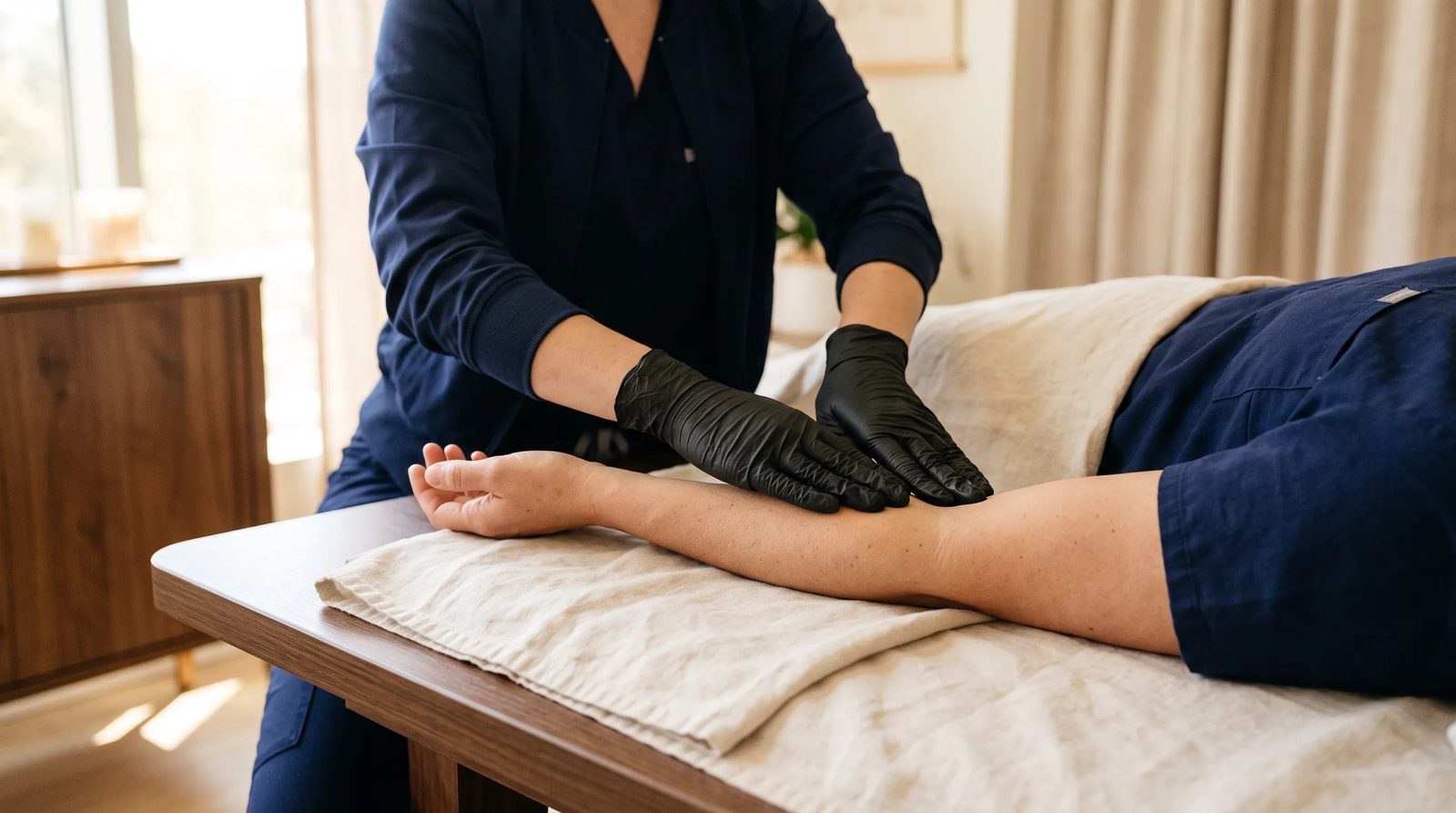
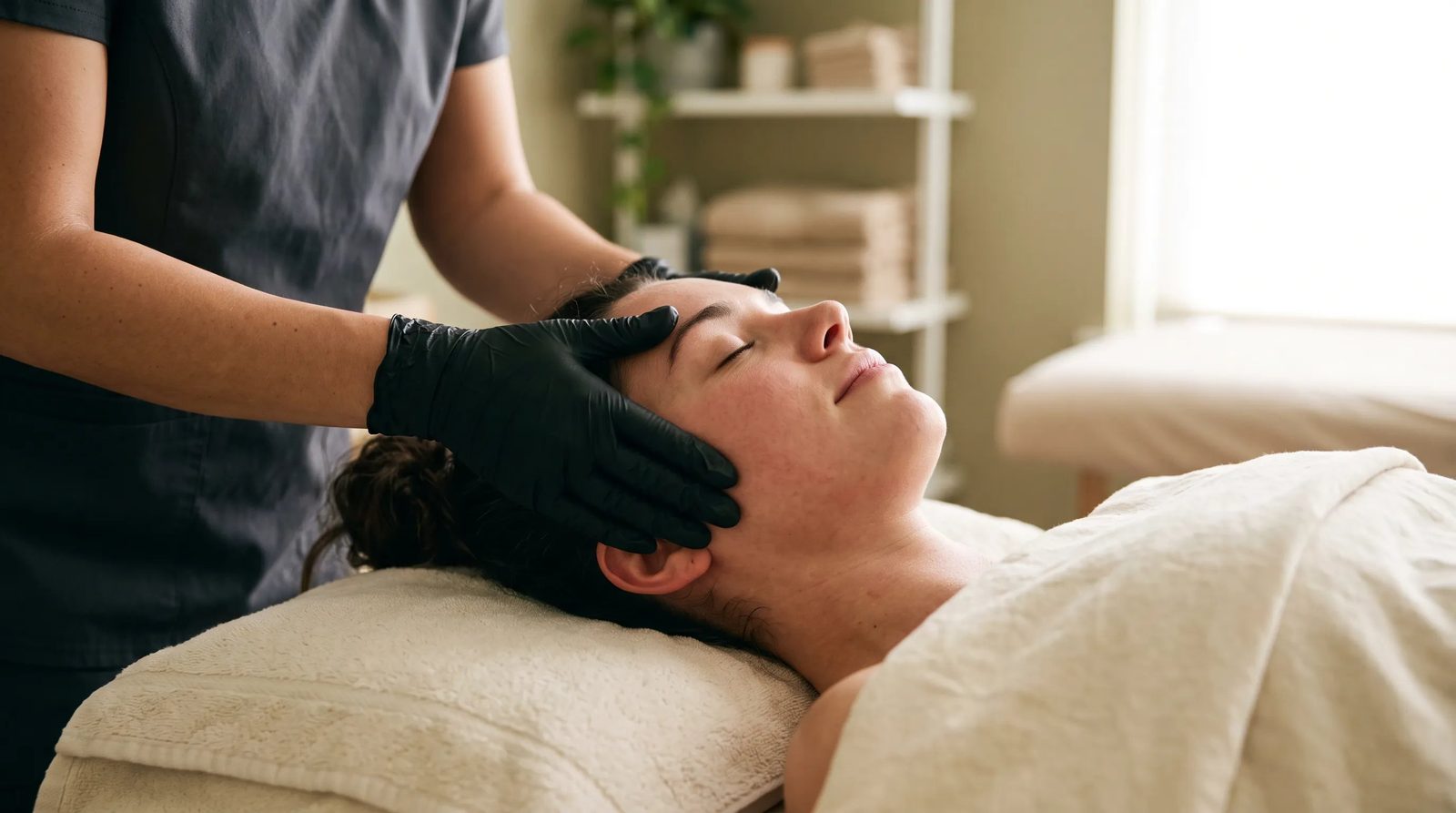
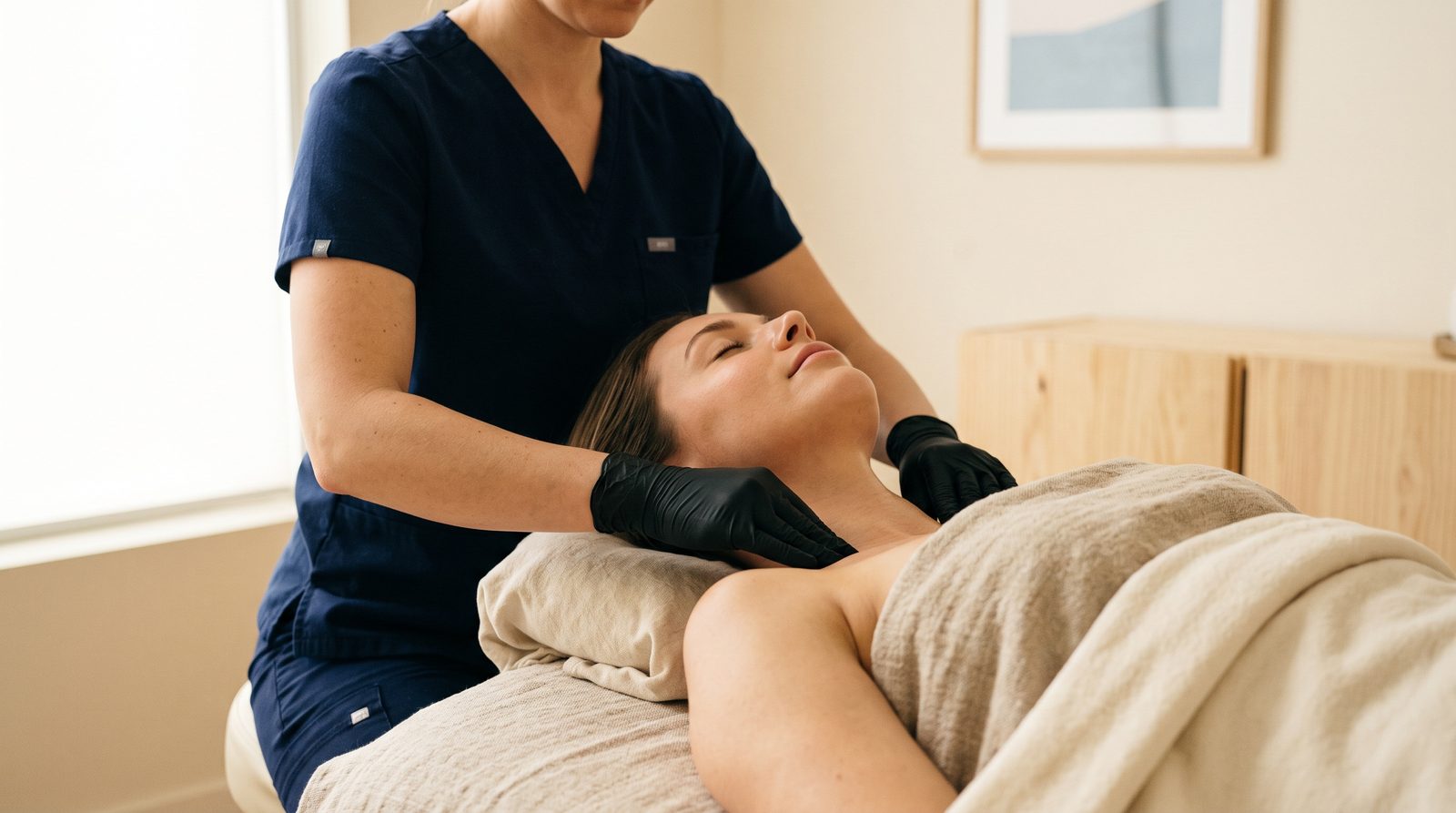
Manual lymphatic drainage (MLD) is gentle, skin-level work done by a trained therapist. It draws pooled fluid toward the lymph nodes that clear it. Your lymph has no pump of its own. Unlike your blood, it relies on movement and gentle stimulation to keep draining, and the hands provide exactly that.
The technique is lighter than most people expect. It does not knead. It does not press hard on swelling. Sharon explains the mechanism the same way in almost every teaching video:
"It siphons and draws fluid. It does not push fluid around. It doesn't squeeze swelling."
A skilled therapist also reads your body as they go. They feel where the fluid is stuck, they open the drainage route in the right order, and they adjust to what your tissue is actually doing that day. As Sharon puts it:
"There's not just one way to do lymph drainage, because everyone's different."
That assessment is something only a trained pair of hands can do. It is the part of the work that no device replicates on its own.
What do the machines actually do?
At National Lymphatic Centers we use a few devices, and we are careful about what we claim for each one. Two are worth understanding here.
The first supports drainage directly. Lymphatic Enhancement Therapy (L.E.T) uses the Aria Elite LymphStar Pro, a set of lymph wands paired with red and blue light. It works along the same principle the hands do, which for some patients helps the fluid move a little more readily. Stephanie Kos, CLT, LMT, is our L.E.T specialist, and the device is always added once a therapist has already opened your drainage by hand.
The second group is warmth-based and comfort-based. RF therapy uses the Venus Legacy device to apply gentle radiofrequency warmth below the surface, which can support skin firmness and comfort over a series. PEMF therapy runs on that same device in a pulsed mode and offers gentle comfort and recovery support. We hedge carefully with both. We do not promise fat loss, dramatic tightening, or a fixed clinical result, and the research behind some of this technology is still developing.
None of these devices assesses your body. None of them decides what your drainage needs. A person does that first, every time.
Is the machine better than the hands?
Neither one is better. They do different jobs, and the comparison only makes sense once you see that.
The hands lead. They assess, they open the route, and they follow your anatomy in the order it needs. A device can add support to that work. It cannot start it, and it cannot judge whether your fluid is safe to move today.
Our patients feel this difference for themselves. In one of our interviews, a patient who had tried both put it simply:
"I've had both done and I feel like I see much more of a difference with the lymphatic drainage with your hands when you do it."
That is one person's experience, shared with her consent, and everyone responds a little differently. Some patients do get real added benefit when we fold a device into the session. The point Sharon keeps coming back to is that the hands make the clinical call. The machine supports the plan the hands have already built.
When would you add a device?
This is a decision your therapist makes at the table, once they have felt how you drain. Some patients get everything they need from manual work alone. Others do better when we add a layer.
A few situations where a device may earn a place in the session:
Sluggish or stubborn drainage. When fluid feels slow to clear, added stimulation from L.E.T can support the manual work your therapist has already started.
Skin firmness and comfort. When the concern is looser skin or tight, heavy-feeling tissue, the warmth of RF can complement the drainage.
Recovery support. During a surgical recovery, gentle comfort-focused sessions can sit alongside the drainage we time to your healing.
In every one of these cases the hands come first. The device is folded in second, working the same drainage order the hands already follow.
What both approaches share
There is one rule that governs the hands and the devices equally. You never move fluid toward a blockage. Sharon teaches it in a single line:
"You never push fluid toward an obstruction."
Safety comes before any tool. Lymphatic work is not right for everyone. We do not perform drainage or device work on patients with AFib, COPD, emphysema, blood clots, or an active infection, and we refer them to a hospital lymphedema clinic instead first. RF and PEMF carry their own cautions around pacemakers, implanted devices, and pregnancy, which is why every session starts with a health review. Severe or acute lymphedema can need a hospital lymphedema clinic with emergency care on site, and we will guide you there.
Whether the answer is hands alone or hands plus a device, that call gets made after we assess you. It is never assumed before you walk in.
How do you decide what is right for you?
Start with a conversation. Tell us what you are dealing with, and we will say plainly whether manual drainage on its own is enough or whether adding a device makes sense for your body. That honesty is the practice. We built it over decades, and it guides every recommendation we make.
National Lymphatic Centers has cared for patients since 1991. Sharon holds her LMT, CLT, BCTMB, CVMLD, and a BS in Biomedical Science, and she leads a team trained in manual lymphatic drainage across our three clinics, with certified lymphedema therapists among them. Whatever tool a session calls for, a trained person is leading it from the first stroke to the last.
If you want to understand the foundation of all of this, read more about manual lymphatic drainage. When you are ready, book a consultation and we will help you choose the right approach.