Why does a rolled ankle balloon overnight, while a bruise on the same leg fades without much swelling at all? Both are your body responding to a small injury. The difference comes down to a quiet, second circulation most people never think about until it stops keeping up. It runs alongside your blood, it clears the fluid your tissues leave behind, and it is a large part of how your immune system does its job. It also happens to be the exact system we work with every day. This is a plain-language look at what the lymphatic system is, what it does, and one thing about it that surprises almost everyone: it has no pump of its own.
What is the lymphatic system?
Your lymphatic system is a network of thin vessels and small filtering stations called lymph nodes. It threads through nearly every part of your body, from your face and neck down to your fingers and toes. The clear fluid moving through it is called lymph.
Here is where it fits with the plumbing you already know about. Your heart pushes blood out to your tissues through arteries. At the far end of that trip, a small amount of fluid seeps out of the blood vessels and bathes your cells. Most of it returns to the bloodstream on its own. The rest, along with proteins, waste, and the occasional stray bacteria, gets picked up by the lymphatic vessels and carried back toward the center of your body. Along the way it passes through lymph nodes, which filter it and screen it for anything your immune system should know about.
So the lymphatic system is doing two jobs at once. It is drainage, moving leftover fluid out of your tissues. It is also surveillance, part of the immune network that helps you fight infection. When people say a treatment "supports your immune system" through lymphatic work, this filtering role is what they mean.
What does the lymphatic system actually do day to day?
Most of the time you never notice it, which is the sign it is working. When it is keeping pace, tissue stays comfortable and light. You feel it most when the balance tips.
Think about the last long flight or a hot day on your feet. Ankles puff. Rings feel tight. That is fluid arriving in the tissues a little faster than the lymphatic system is clearing it. Give it some movement and some time, and the swelling usually settles. This is your lymphatic system managing normal, everyday fluid load.
The same drainage role shows up after surgery and after injury, only bigger. A procedure creates swelling in the area while the body heals, and the lymphatic system is what carries that extra fluid away over the following days and weeks. Its immune role matters here too, since clearing fluid and filtering it are part of how the tissue calms down.
Why doesn't the lymphatic system just drain on its own?
This is the part that surprises people, and it is the reason manual work exists in the first place. Your blood has a pump. Your heart beats about a hundred thousand times a day and keeps blood moving whether you think about it or not. Your lymphatic system has no such pump. It relies on movement and gentle stimulation to keep fluid heading in the right direction.
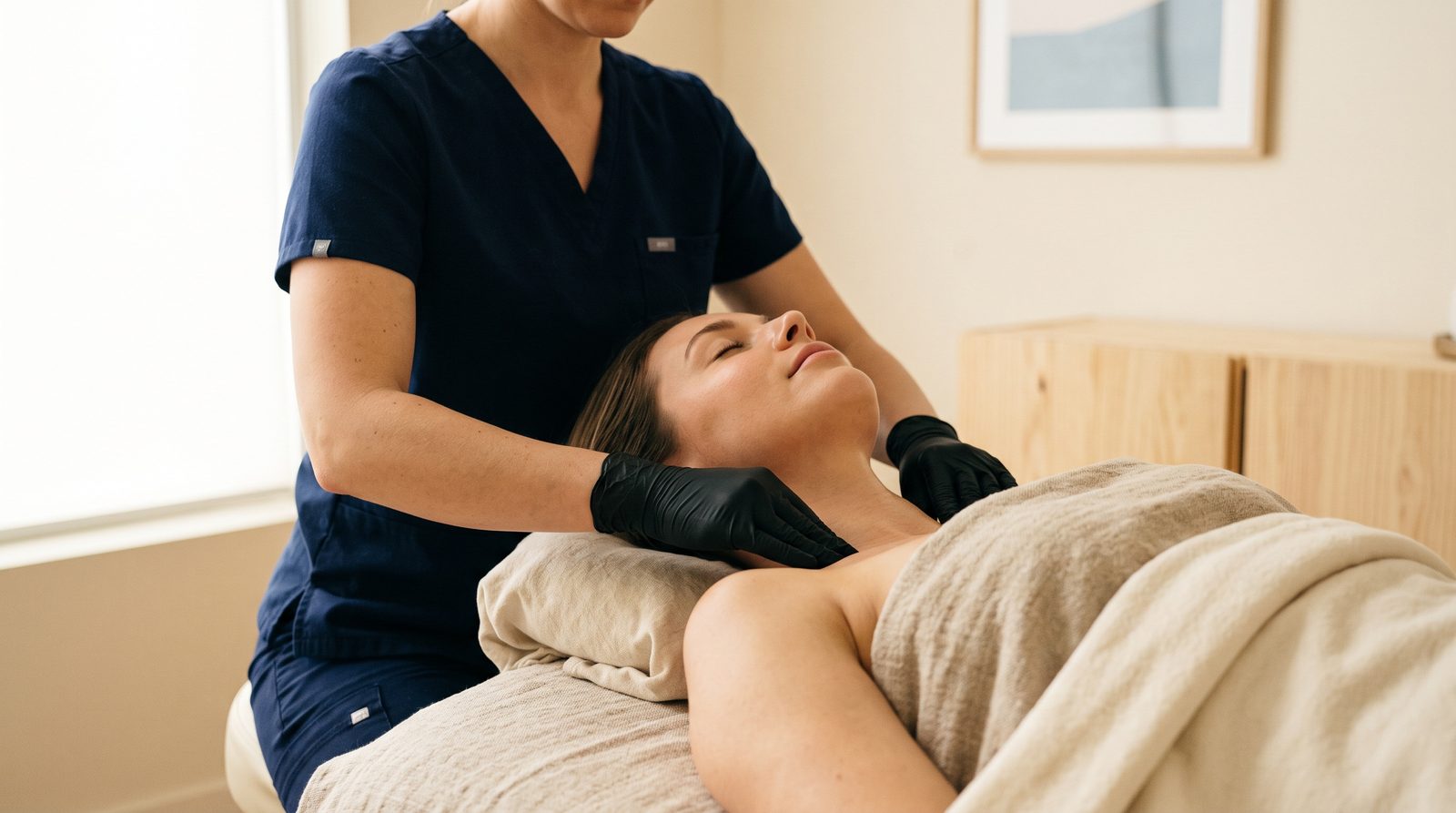
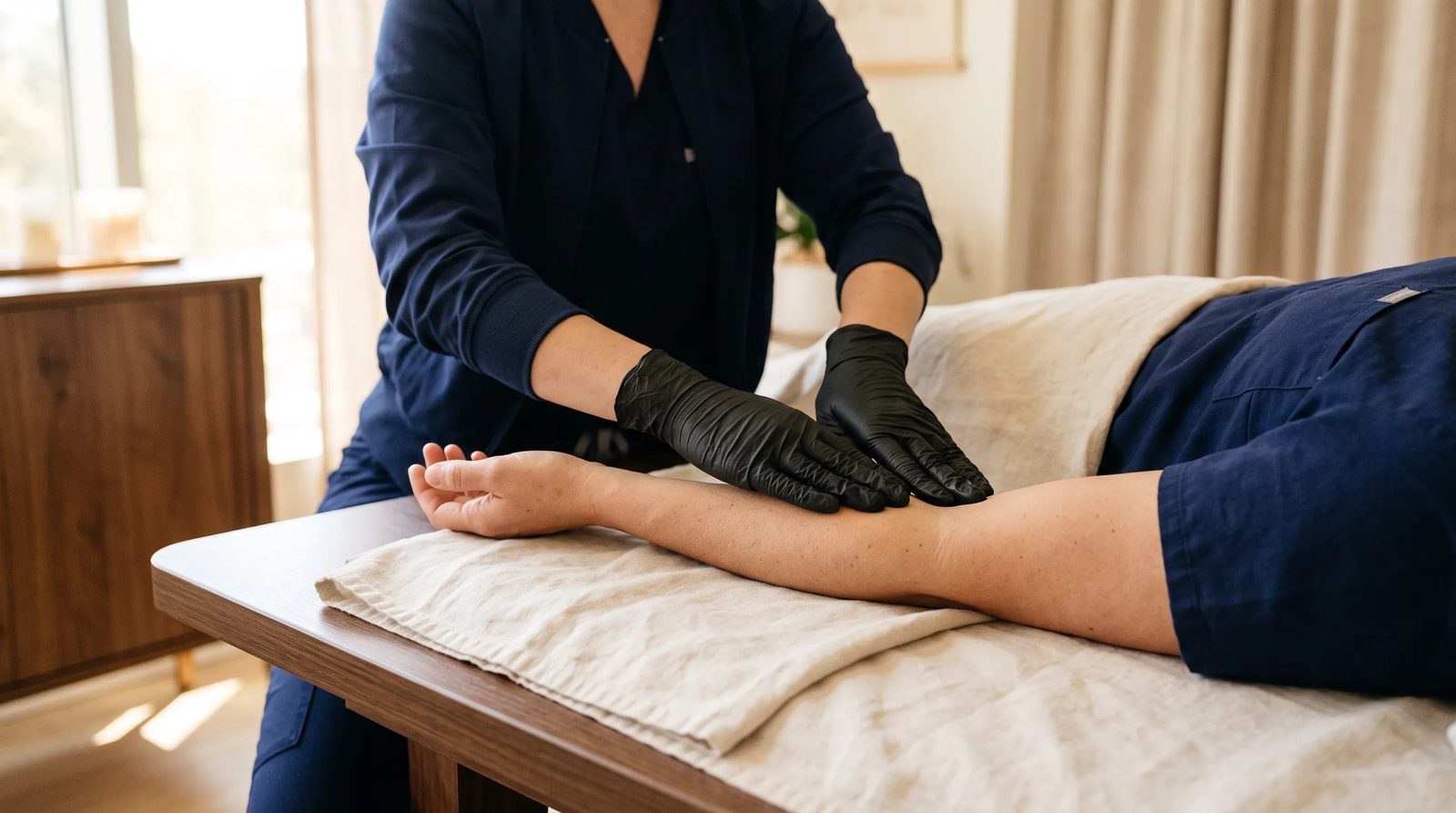
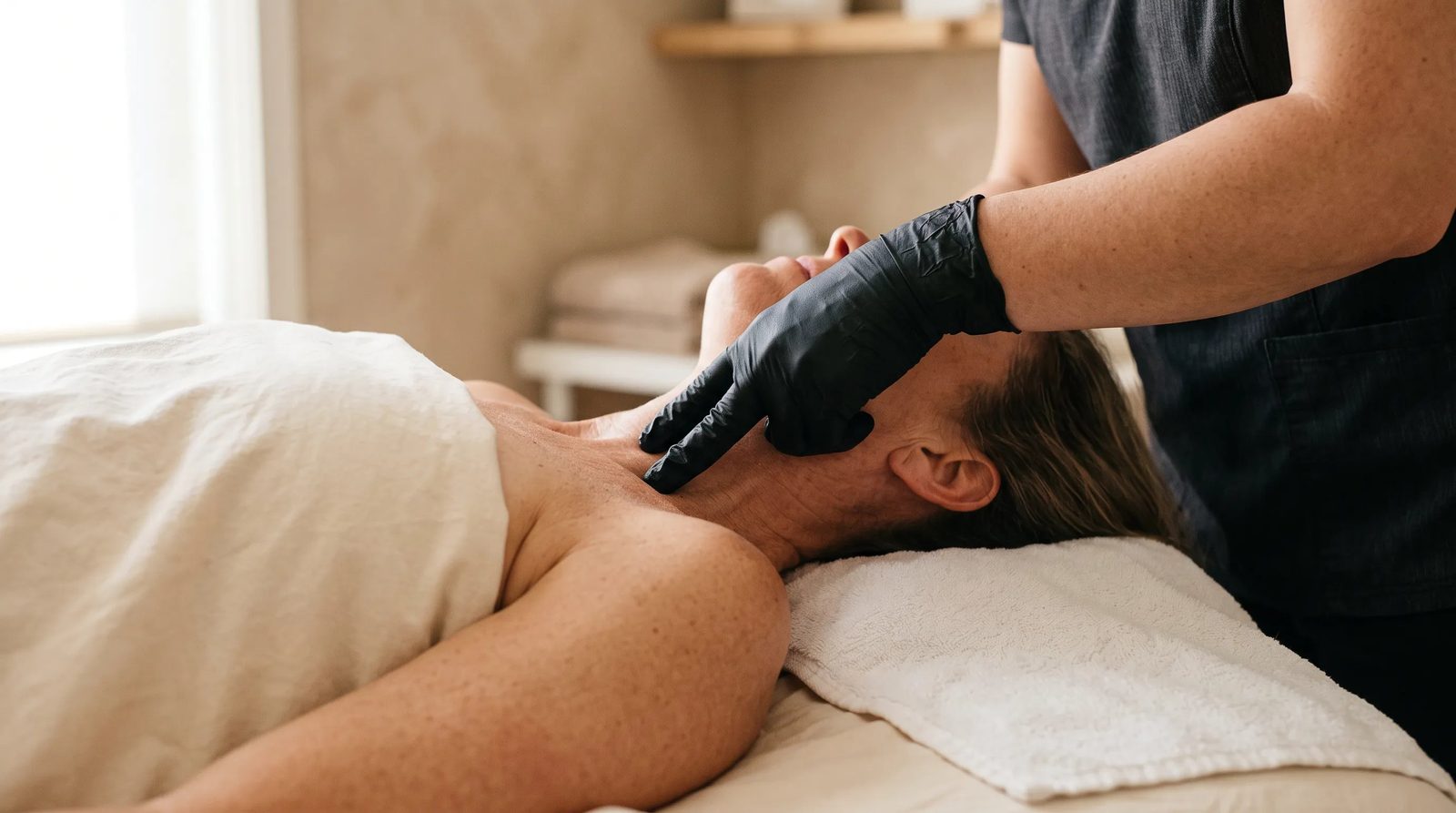
What moves it? Your own muscles, mostly, as they contract and squeeze the vessels running through them. Deep breathing helps. So does simply walking around. Gentle, skin-level touch helps too, which is the foundation of the work we do. Our founder, Sharon Vogel, puts the mechanism in plain terms:
"It siphons and draws fluid. It does not push fluid around. It doesn't squeeze swelling."
That distinction is the whole point. Good lymphatic work does not knead or press. It draws. Sharon describes the technique itself this way:
"Massaging swelling hurts, but lymph drainage initiates the parasympathetic through a skin-twisting technique, and it does not hurt."
The parasympathetic part is worth pausing on. That is the "rest and digest" side of your nervous system, the calm setting your body drops into when it feels safe. Light, rhythmic skin movement can help nudge it there, which is one reason so many people find this kind of work relaxing rather than uncomfortable.
What happens when the lymphatic system falls behind?
When the system is overloaded, injured, or missing pieces (after certain surgeries, for example), fluid has nowhere to go. It pools. That can look like puffiness that lingers past the point you expected, a limb that feels heavy by evening, or swelling after a procedure that seems to sit for weeks.
There is also a rule that governs how skilled lymphatic work is sequenced, and it matters for safety. You do not just start where the swelling is. You open the route first, closer to the center of the body, so the fluid further out has somewhere to drain toward. Sharon teaches it as a hard line:
"You never push fluid toward an obstruction."
Clearing the pathway before drawing the fluid is a general principle of how the system moves, and it is a reminder that lymphatic work is a clinical skill that takes real training. It is also why gentle self-massage or a dry-brush routine, while pleasant, cannot replace trained hands on a genuine fluid problem.
A quick word on limits, because honesty matters more than reassurance here. Lymphatic work is supportive care that helps fluid move. It is not a cure for any medical condition, and it is not right for everyone. Some conditions, including certain heart and lung problems, blood clots, and active infections, need a physician's involvement first, and severe cases belong in a hospital lymphedema clinic where emergency care is on hand. When we assess someone, this comes before anything else.
How can I keep my lymphatic system moving?
The everyday answer is encouraging, because the system responds to the simple things. Move your body. Walk. Breathe deeply. Stay hydrated so the fluid stays fluid. Elevation helps when a limb is swollen, since it lets gravity assist the drainage rather than fight it.
When swelling is stubborn, keeps returning, or follows surgery or a diagnosed condition, that is when trained manual lymphatic drainage earns its place. There is no single routine that fits everyone, which is something Sharon says often:
"There's not just one way to do lymph drainage, because everyone's different."
If you want the fuller picture of how we work with the system rather than around it, our manual lymphatic drainage page walks through the treatment itself. If you are managing ongoing swelling from a lymphatic condition, our lymphedema therapy page is the place to start.
The lymphatic system asks for very little. A bit of movement, a bit of patience, and the right help when it falls behind. Understanding how it works is the first step toward giving it what it needs.
If you have a question about your own swelling or recovery, tell us what is going on and we will say honestly whether this work can help. You can also explore the rest of our education library to keep learning.