If you have booked your first session, or you are thinking about it, there is a good chance this question is sitting near the front of your mind. Will it hurt? Most people picture a firm, deep massage that digs into sore muscles, and they brace themselves for the same thing here. That mental image is worth correcting before you arrive, because manual lymphatic drainage works in a completely different way, and the sensation is different too. Here is the short answer, and then the fuller picture of what patients tell us they actually feel on the table.
So, does it hurt?
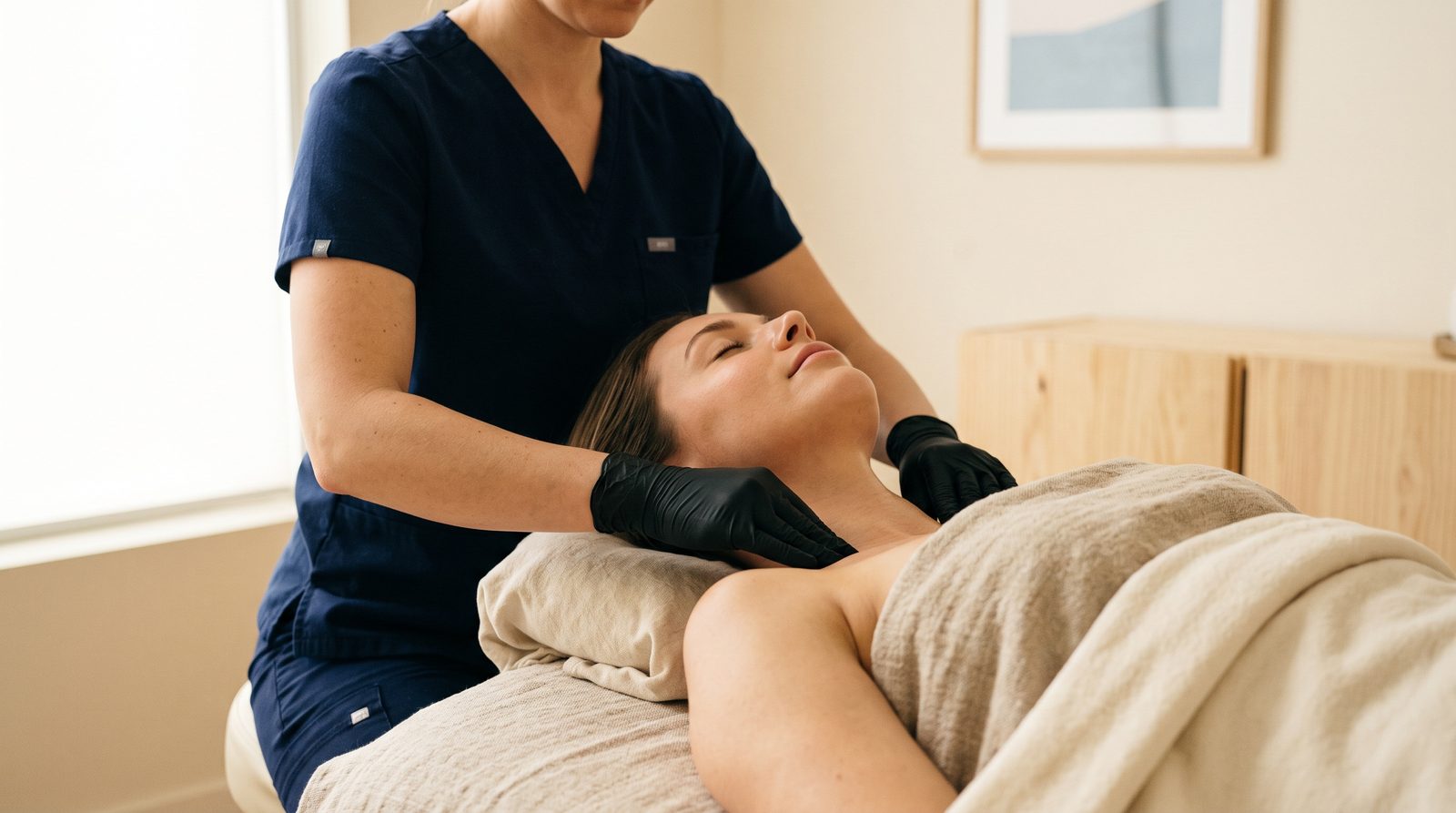
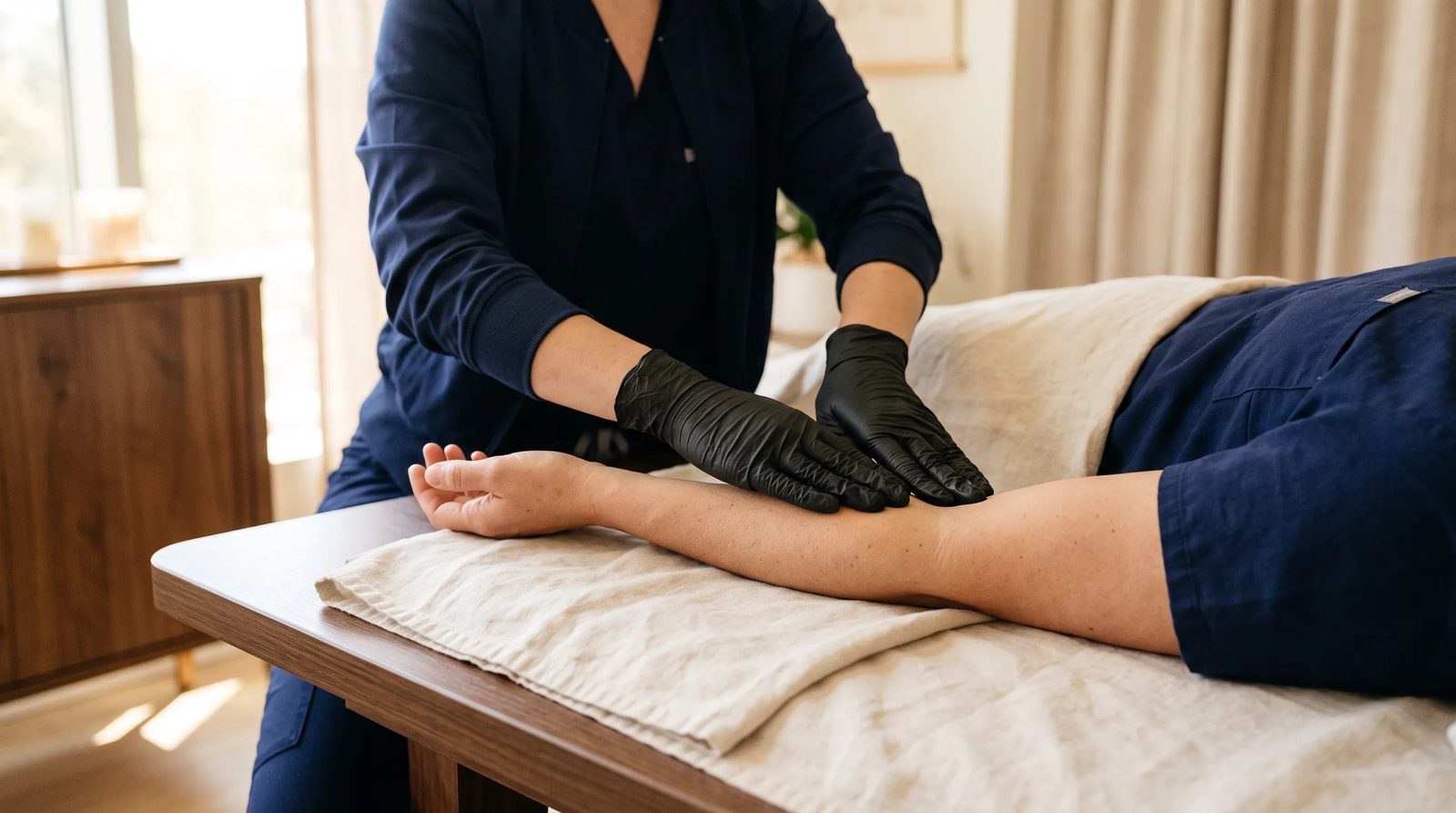
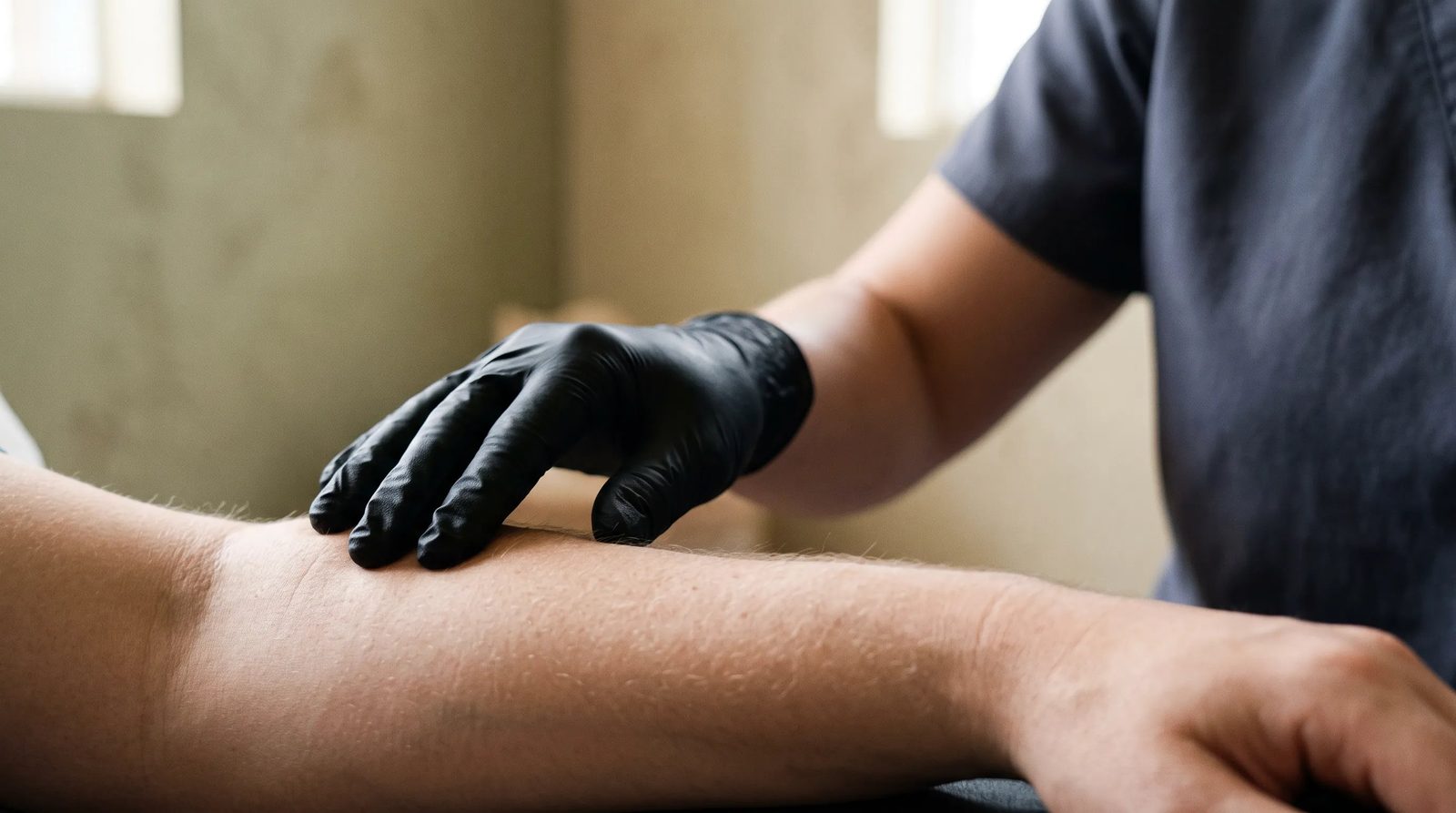
The honest answer for most people is no. Manual lymphatic drainage is a light, rhythmic technique that stays at the surface of the skin. It is not a deep-tissue massage, and it is not meant to press hard into swollen tissue. Our founder, Sharon Vogel, gets this question so often that she has a standard way of answering it:
"Squeezing hurts. Massaging swelling hurts, but lymph drainage initiates the parasympathetic through a skin-twisting technique, and it does not hurt. It is comfortable."
That distinction is the whole reason the work feels the way it does. Two different things can happen when someone touches a swollen area. You can compress it, which pushes on tissue that is already full and tender, and that pressure is what tends to hurt. Or you can use the gentle skin-level movement that lymphatic drainage relies on, which coaxes fluid toward where it needs to go without bearing down on the swelling at all. Sharon describes the mechanism in plain terms:
"It siphons and draws fluid. It does not push fluid around. It doesn't squeeze swelling."
The word "parasympathetic" in her answer is worth a second. That is the calm, "rest and digest" setting of your nervous system, the state your body settles into when it feels safe. Light, repetitive skin movement can help nudge you there, which is one reason so many people describe the experience as relaxing. It is common to feel drowsy partway through, and a few people drift off entirely.
What do patients say they actually feel?
Descriptions from real sessions land far closer to "soothing" than "sore." One of our Downers Grove patients, Wanda, had come in several times before we filmed a short review with her. When Sharon asked whether the treatment ever hurt, her answer was quick:
"No, not at all. It's actually very gentle. I came in here thinking it might hurt."
Her expectation going in is the interesting part, because it is the same one most first-timers carry. She had braced for discomfort, and what she found instead was gentle enough that she kept coming back. In her own words, after a session:
"You just feel so good afterwards."
Wanda's experience is her own, and everyone responds a little differently. What her account illustrates is how often the fear of pain turns out to be bigger than anything the treatment delivers. For a general sense of the pace and feel of a visit, our what to expect during lymphatic drainage page walks through a session start to finish.
Can any part of it feel tender?
Honesty matters more than reassurance here, so it is worth saying plainly that some people do feel tenderness in certain spots, and that is normal. When an area is inflamed, congested, or recovering from surgery, the tissue can already be sensitive before anyone touches it. Working near those areas can register as tender even with a light hand.
A patient named Selena described exactly this on day five of her recovery. She did not sugarcoat it, and we would not want her to:
"It was very tender. It was painful, but it was bearable. You guys made me feel very, very comfortable."
Read that quote closely, because it holds two true things at once. There were tender moments, and she still felt comfortable and cared for throughout. That is a very common shape for a session that involves genuinely swollen or post-surgical tissue. Selena's account is her individual experience, and yours may be lighter or different depending on what is going on in your body. By the end of that same visit she put it simply:
"I'm really not sore anymore."
Tenderness, when it shows up, tends to be brief and localized to the spots that were already sensitive. Your therapist adjusts pressure continuously and checks in with you, so nothing has to be endured in silence.
What can I do to feel most comfortable?
The most useful thing you can do is talk to your therapist. Tell them if a spot feels tender, tell them if you would prefer even lighter pressure, and tell them what you are hoping the session focuses on. Wanda mentioned that she would come in and say maybe this time focus on the sinuses, or this area, and her therapist would adjust. That kind of back-and-forth is exactly how the work is meant to go.
A few simple things help too. Arrive hydrated, since fluid moves more easily when you are well watered. Wear something comfortable you can relax in. Give yourself permission to do nothing for the length of the session, because the calmer you are, the more the parasympathetic effect Sharon describes can settle in.
It is also fair to remember what this work is and is not. Lymphatic drainage is supportive, gentle care that helps fluid move. It is not a cure for any medical condition, and it is not right for everyone. Certain conditions, including some heart and lung problems, blood clots, and active infections, need a physician's involvement first. When we assess someone, that conversation comes before anything else.
If you want the bigger picture of how the treatment works and who it helps, our manual lymphatic drainage page is the place to start, and our benefits of lymphatic drainage page covers what people come in hoping to feel.
The fear of pain keeps a lot of people from trying something that could genuinely help them feel lighter and more comfortable. If you are on the fence, or you have a tender area you are worried about, tell us what is going on and we will talk it through honestly before you ever book. You can also keep reading in our education library.