
Have you ever felt a little off in the day or two after a lymphatic session, a bit tired or foggy, and wondered whether that is a normal part of the process? It is one of the most common questions we hear, and it usually comes down to a single word: herxing. This is a plain-language look at what herxing is, why it can show up after lymphatic work, and the steps that help you stay ahead of it. A quick note before we start. This article is for general education. It is not medical advice, and nothing here describes a treatment for any disease. If you live with Lyme, an autoimmune condition, or any diagnosis, your physician stays at the center of your care, and anything you feel that worries you belongs in a conversation with them.
What is herxing?
Herxing is short for a Herxheimer reaction, sometimes called a Jarisch-Herxheimer reaction. In plain terms, it describes a temporary period where some people feel a little worse before they feel better as their body works through material that has started to move. Think mild fatigue, a heavy or achy feeling, a slight headache, or a foggy afternoon. For most people who notice it at all, it is brief and it passes on its own.
It helps to hold this loosely. Herxing is a general, possible response that some people experience, and plenty of people never notice anything of the kind. It does not mean a session worked, and we never set out to bring it on. When we talk about it, we are simply naming something you might feel so you are not caught off guard, and so you know how to ease it.
Why can herxing happen after lymphatic drainage?
To understand why herxing can appear, it helps to remember what the lymphatic system is doing in the first place. It gathers up the fluid, proteins, and waste your tissues leave behind and carries them back toward the center of your body, passing them through lymph nodes that filter along the way. Our how the lymphatic system works article walks through the whole picture if you want the foundation.
When there has been a lot of fluid sitting in one place for a while, gentle lymphatic work sets that load in motion, and all of it now has to be processed. Our founder, Sharon Vogel, explains why that processing step is where a reaction can come from:
"If there's Lyme and you have autoimmune and there's pooling lymphatic load, all that, once it starts moving, has to get processed through the lymph nodes."
Sharon is describing why a body carrying a heavy backlog of fluid can feel the shift when that fluid finally moves, and why the amount that moves at once matters so much. Lymphatic drainage is supportive care that helps fluid move. It is a comfort and mobility support, and it is not a treatment for Lyme disease or for any autoimmune condition. Those belong with your doctor.
How the right sequence keeps herxing to a minimum
Here is the encouraging part. The single biggest thing that keeps herxing quiet is the order the work is done in, and that order is a trained clinical skill. The idea is to open the exits first and then move fluid in small, deliberate steps so the lymph nodes are never asked to process a flood all at once.
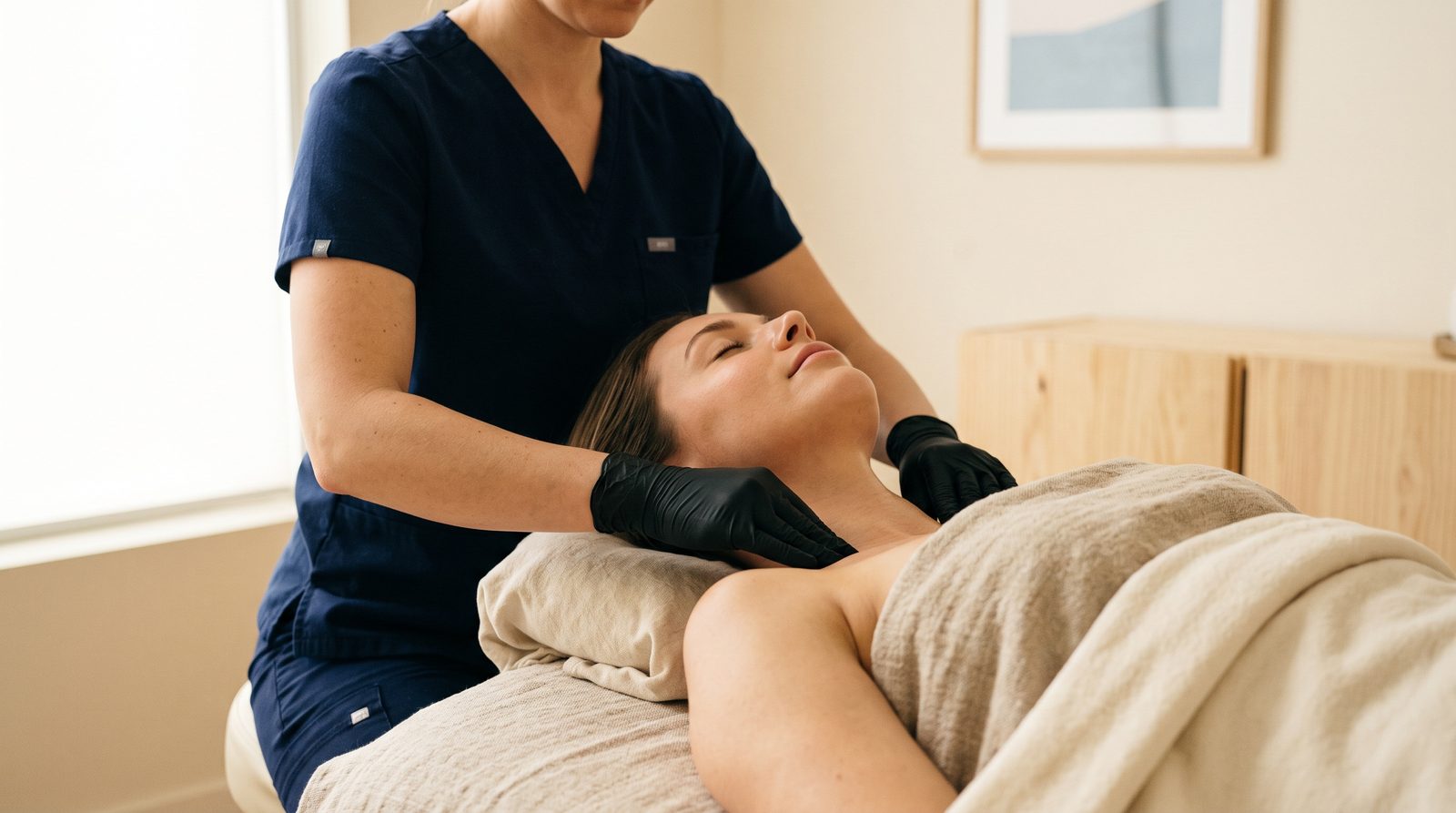
That is why a proper session begins near the center of the body, at what therapists call the venous angle, or terminus, where lymph rejoins the bloodstream. Sharon puts the starting point plainly:
"You start at your venous angle, at your terminus. You don't start at your feet and push everything down."
From that open exit, the work moves through the body in a set order, one region at a time:
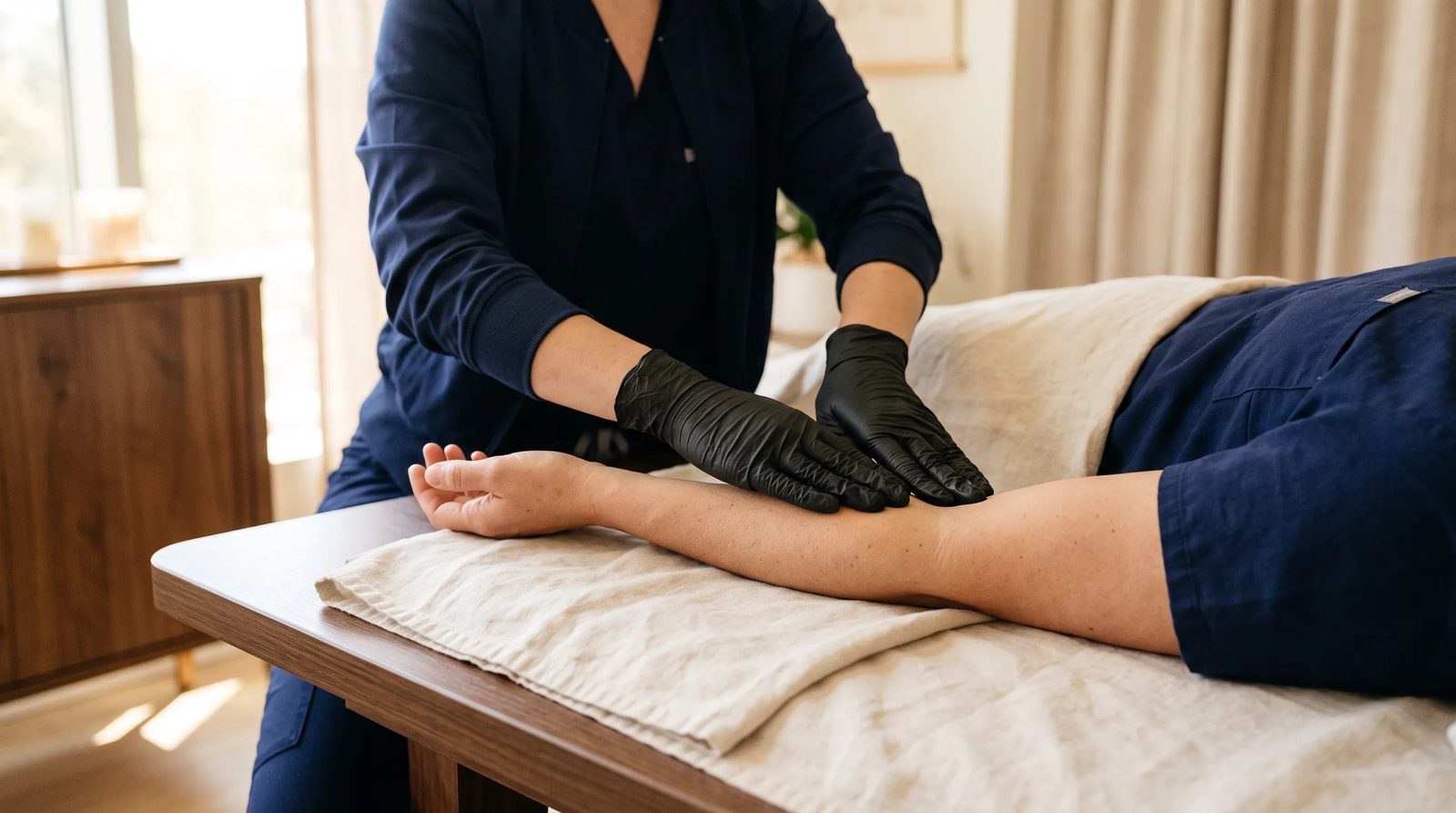
"Start with small areas. The head, then the arms, then the thoracic, then the abdominal, then the legs. Orderly, nice and neat."
She uses a picture that patients tend to remember, and it captures the whole philosophy of controlled, gradual drainage:
"Take that debris and go right into the dustpan. Not a dust cloud. Very neat and orderly. We don't want any herxing."
That image is the goal in a nutshell. Move things cleanly toward the exit in small amounts, keep everything measured, and give the lymph nodes a manageable pace to work at. This careful sequencing is a large part of why skilled manual lymphatic drainage is a clinical skill that takes real training. It is also why gentle self-massage at home works best as a light daily companion to professional care, and a real fluid problem still needs trained hands.
What can I do at home to prevent herxing?
Once a session opens the pathways, you have a real part to play in keeping the momentum gentle and steady. Sharon frames it as a shared job:
"After the treatments, it's the patient's job to keep that fluid moving."
She describes it as light, regular attention to that same exit area, the venous angle near your collarbones, rather than one big effort. A little stimulation of that spot, done gently and often through the day, keeps fluid heading toward its proper drainage routes instead of pooling again. The reason this matters is simple:
"Once we create a lymphatic plexus water current, that lymph is going to drain, and we need you to keep it draining in the right places."
Alongside that, the everyday basics do a lot of quiet work. Stay well hydrated so the fluid stays fluid. Keep moving, since your own muscles are what pump the lymphatic system along. Elevate a swollen limb when you can, and rest when your body asks for it. Your therapist will show you the specific spot and motion to use for your own body, because there is no single routine that fits everyone.
When should I check with my doctor?
Most of what people feel after a session is mild and short-lived. Even so, the honest guidance is the same one we give in the room. If you feel genuinely unwell, if symptoms are strong or last longer than a day or two, or if anything at all concerns you, contact your physician. That is doubly true if you are managing Lyme, an autoimmune condition, or any active diagnosis, because those situations call for medical oversight that a lymphatic session does not replace. We are glad to work alongside your doctor. We are not a stand-in for one.
If you are curious how these ideas play out in a real recovery, Kristen's Lyme disease recovery story shares one patient's individual experience in her own words. And if you have a question about your own body or a session you have coming up, tell us what is going on and we will talk it through honestly. You can also keep exploring the rest of our education library whenever you like.
Herxing, when it happens at all, is usually a small and passing thing. Understanding it, doing the work in the right order, and keeping fluid gently moving afterward are how we keep it that way.