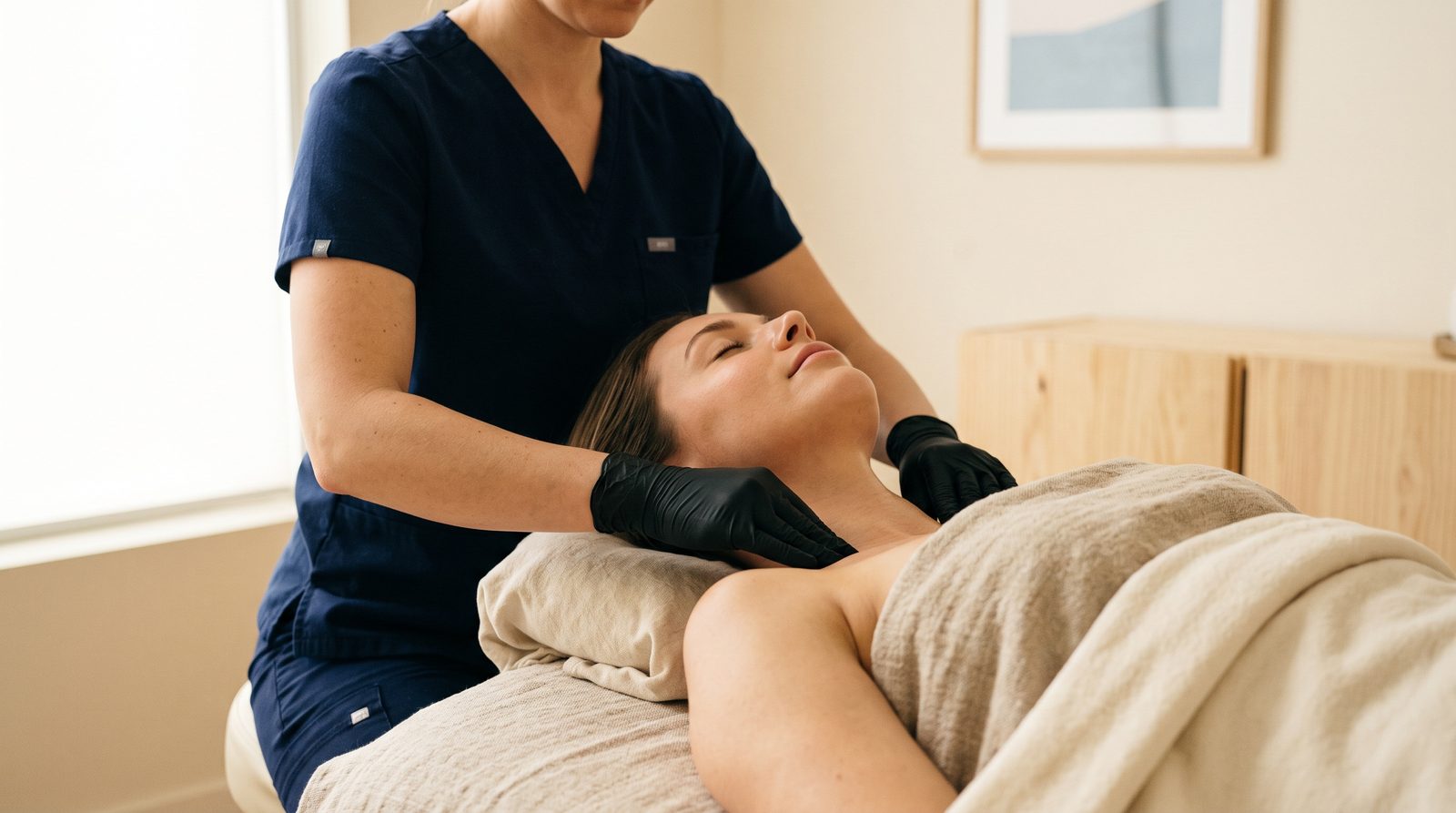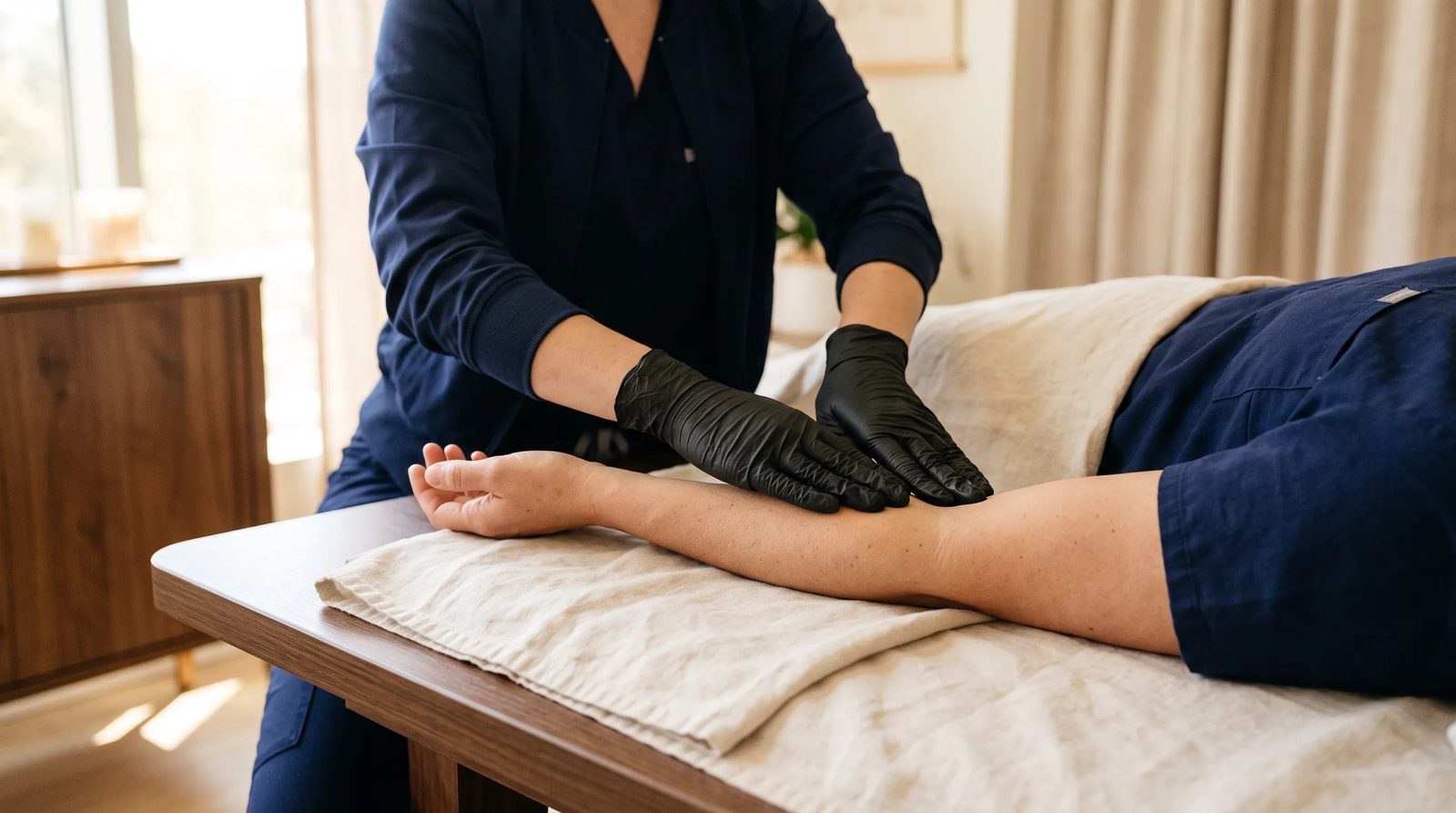
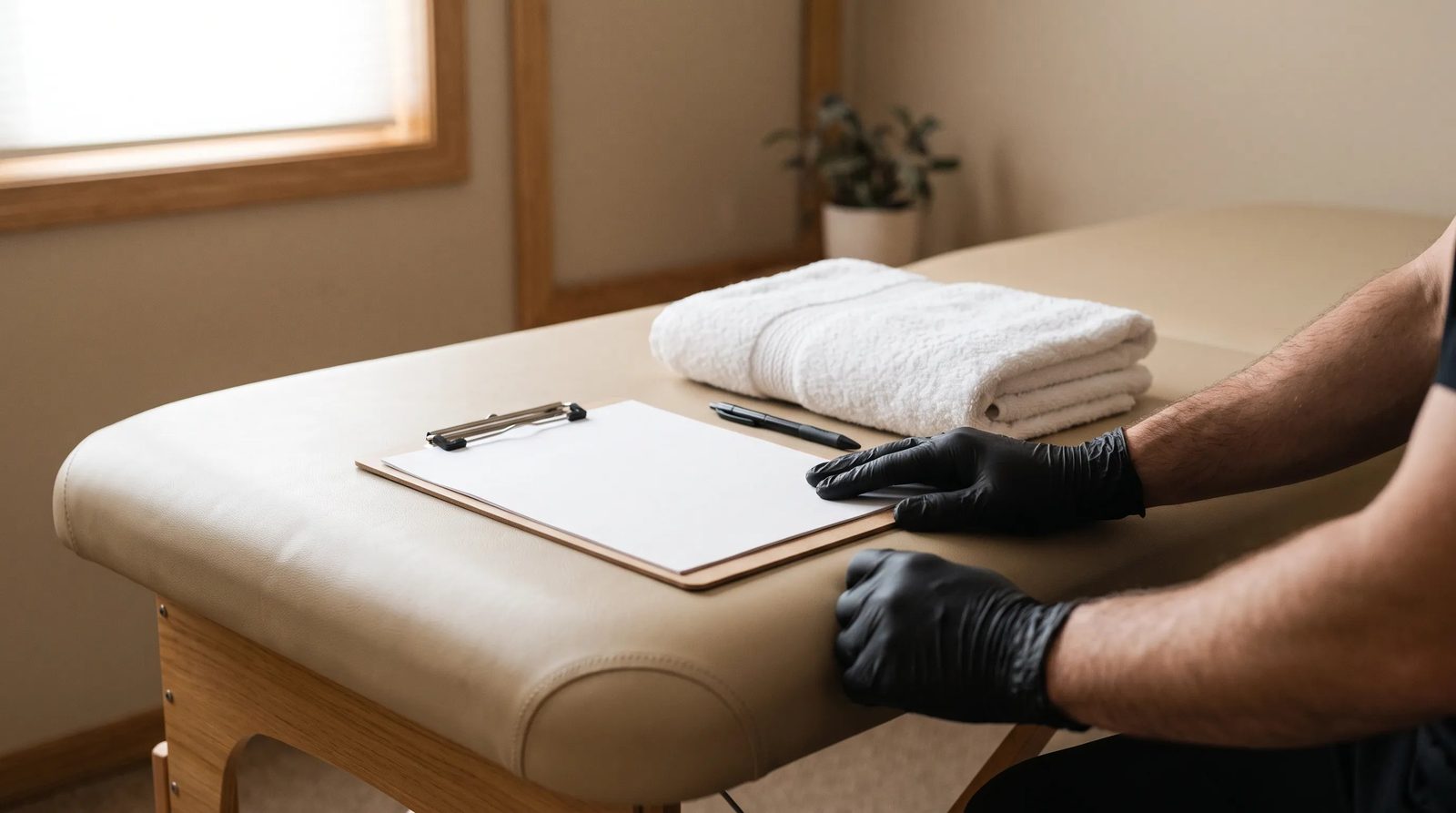
Can you just book a lymphatic drainage session, or do you need a prescription from your doctor first? It is one of the most common questions we hear, and the short answer surprises a lot of people. For most patients, no script is required to come in. There are a few situations where we do ask for one, and there is a good reason you might want a script even when it is not required. Here is how it actually works. Our founder, Sharon Vogel, gets this question so often she made a short video about it. This article walks through the same answer in a little more detail.
So do you actually need a prescription?
For most people, no. We are a standalone practice, which means you can book a manual lymphatic drainage (MLD) session directly with us without a referral or a script from a physician. Sharon puts it plainly:
"We are standalone practitioners, so we don't need a script."
That said, her very first piece of advice is always the same, and it is worth repeating:
"The answer is always talk to your doctor first. Let them know what you're having done."
A quick word with your doctor matters because lymphatic work moves fluid through your body, and your doctor knows your full medical picture. Keeping them in the loop keeps everyone on the same page about your care. So while a script is usually not required to book, a quick conversation with your physician is always a good idea before you start.
Why would I want a script if I don't need one?
Here is the part most people do not realize. A script from your doctor can help you on the money side, even though we do not require one to treat you.
National Lymphatic Centers is a self-pay practice, so you pay at the time of your visit and we give you an itemized receipt, called a superbill, that lists your visit and the appropriate medical codes. You submit that superbill to your insurer yourself. Depending on your plan, that paperwork may help you toward an out-of-network benefit or an out-of-pocket deductible. As Sharon says, it is worth having:
"Anytime you can get a script for swelling, why not? It'll help you with insurance and it's good to let your doctor know."
To be clear about what this means for you. Whether any amount comes back to you, and how much, is entirely up to your individual insurance plan. We cannot promise coverage or a specific reimbursement. Many patients do submit their superbills and pursue out-of-network reimbursement, and the best way to know what your plan allows is to call the member number on the back of your insurance card and ask.
What are the codes on a script, and why do they matter?
If your doctor writes you a script, it will usually include one or more medical codes. These codes tell your insurer what condition is being addressed and what service was performed. Two you may see relate to the reasons people seek lymphatic work: one code corresponds to lymphedema, and another corresponds to edema, the general term for swelling. There are also separate procedure codes for the manual lymphatic drainage itself.
You do not need to memorize any of this. Your physician's office handles the coding when they write the script, and we handle it on the superbill we give you. The reason it is worth knowing at all is simple. A script with the right codes is what turns your visit into a document your insurer can actually read when you submit it. Bring your script to your first visit, and we will make sure your superbill reflects it.
Are there times you do need a script, or should wait?
Yes, a few. These are situations where we want your doctor fully in the loop before we begin, both for your safety and so your care is coordinated.
If you are pregnant, we ask for a script. Prenatal bodies change quickly, and we want your OB or midwife aware of everything you are doing. In Sharon's words:
"If you're prenatal, we ask for a script. We don't need it, but we want the doctor to know everything that you're having done."
If you are going through chemotherapy, timing matters. We ask sensitive patients on chemo to wait before coming in:
"Maybe you're on chemo. We want you to wait two weeks after your last medication."
That two-week window gives your body time and keeps your oncology team's plan front and center. If you are recovering from surgery, you are in familiar territory for us. Post-surgical swelling is a large part of what we do every day, and here again a script from your surgeon helps coordinate your recovery and supports any insurance paperwork you choose to submit.
A quick and honest note on limits. Lymphatic drainage is supportive care that helps fluid move. It is not a cure for any medical condition, and it is not right for every situation. Some conditions need a physician's direct involvement first. This is exactly why the "talk to your doctor first" step comes before anything else.
How do I get started?
If you want to see what a session actually involves before you book, our what to expect page walks you through a visit from start to finish. If pricing is on your mind, our pricing page lays out session and series options so you know what to plan for, whether or not you end up submitting a superbill.
For pregnancy and recovery specifically, our prenatal massage and postpartum massage pages cover how we work with you through and after pregnancy, including the script step we ask for during pregnancy.
Ready to book? You can schedule directly through our online booking page. If you would rather ask a question first, tell us what is going on and we will point you in the right direction, including whether a script makes sense for your situation. You can also keep reading in our education library.
The bottom line. You can usually come right in. Talk to your doctor first, ask for a script if you want the insurance paperwork on your side, and let us handle the rest.