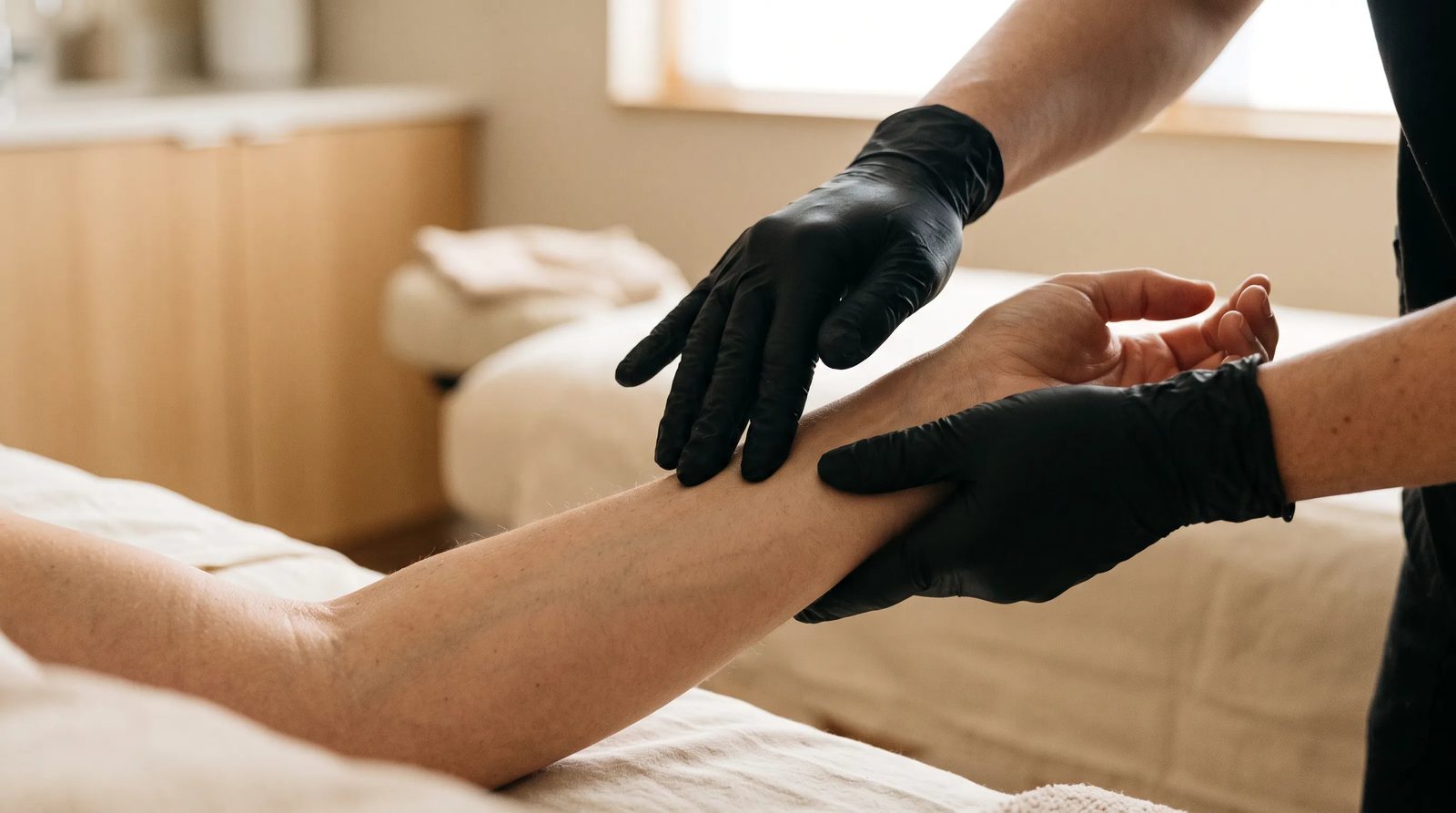
Why would two people with nearly identical swelling need two completely different treatments? On paper their symptoms line up. A skilled lymphatic therapist will still map a different route across each body, and the reason comes down to something most people never hear about: the pathways. Manual lymphatic drainage (MLD) moves fluid along specific routes back toward the center of the body. Those routes are personal. Where the fluid needs to travel, and where it must never be sent, depends on the life a particular body has lived, the surgeries it has had, and the conditions it carries. This is a plain-language look at what an MLD pathway is, why it shifts from person to person, and why reading the map correctly is a trained clinical skill.
What is an MLD pathway?
Your lymphatic system is a network of thin vessels that collects the fluid your tissues leave behind and carries it back toward your heart, filtering it through lymph nodes along the way. If you want the full picture of how that network runs, our how the lymphatic system works article walks through it.
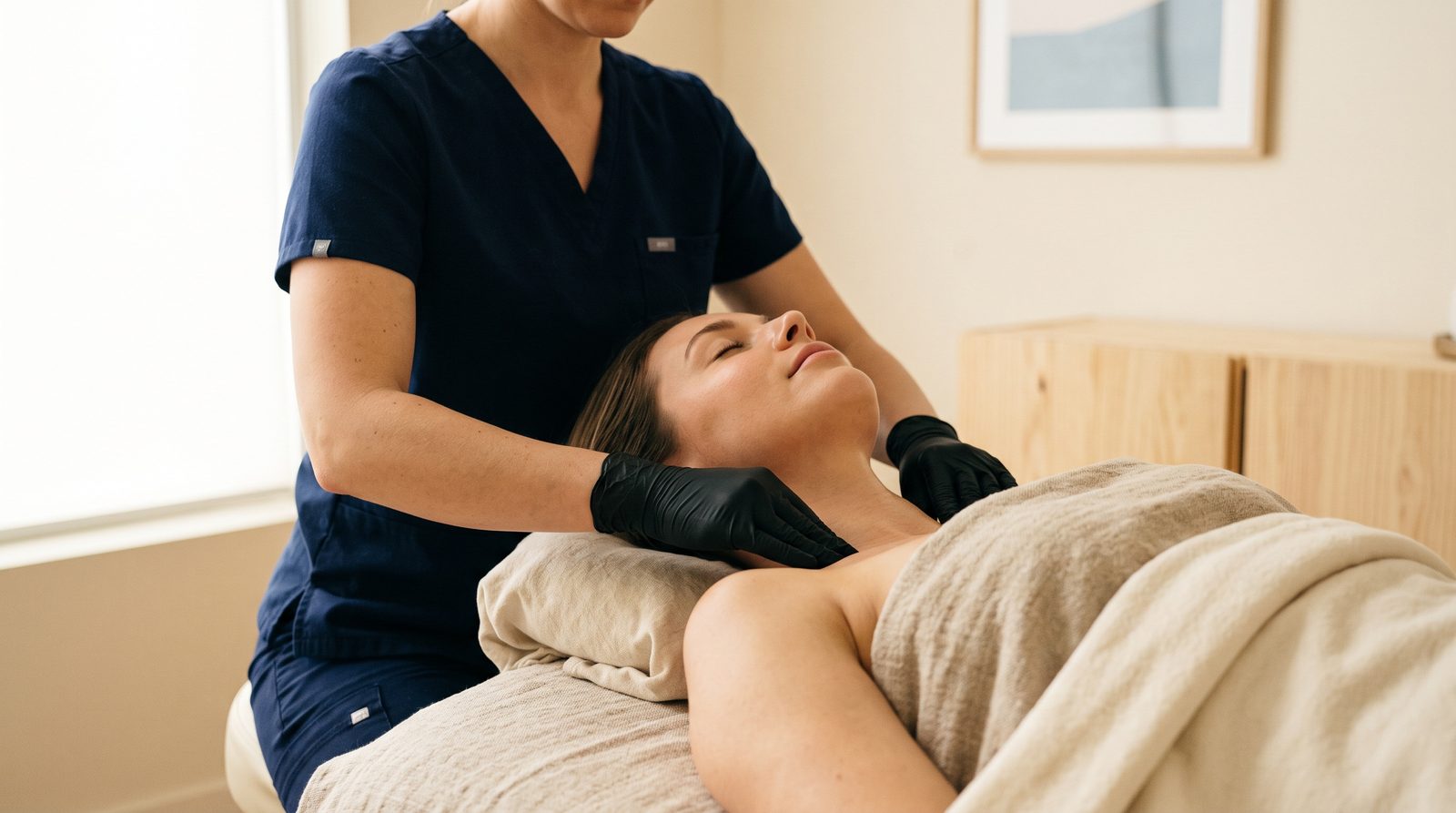
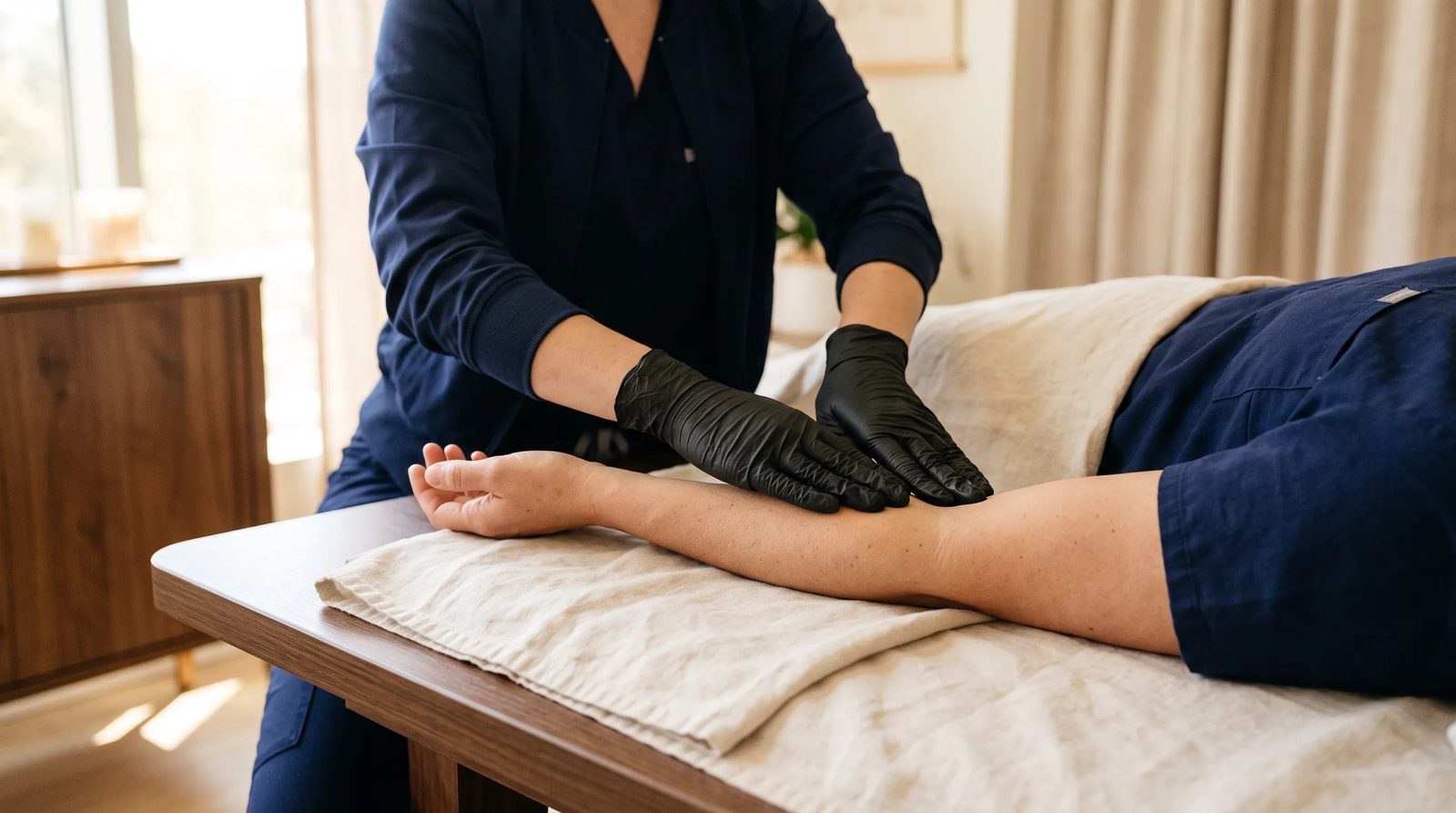
A pathway is simply the route a therapist follows to move that fluid in the direction the body wants it to go. Our founder, Sharon Vogel, describes the underlying pull in one line:
"All the fluid wants to come back to the heart."
That gives the work its direction. The hands follow the body's own drainage design, opening the route closer to the center first so the fluid further out has somewhere to go. On a body that has not been through much, those routes are fairly predictable. The moment a body has had surgery or is managing a condition, the map changes.
Why are the pathways different for different people?
Sharon puts the principle plainly, and it sits at the heart of how we work:
"There's not just one way to do lymph drainage, because everyone's different."
She is describing something she sees every day. The route depends on what a person's body has been through:
"The pathways are different for different people depending on the surgeries or conditions that they have."
Picture what that means in practice. Two clients arrive with swelling in the same leg. One has had a knee replacement; the other is managing a lymphatic condition. The fluid sits in the same place, yet the safe, effective route for moving it is different for each of them, because their tissue, their scar patterns, and their filtering stations are different. That is why every genuine treatment opens with a full assessment.
Why does the route change after surgery or a diagnosis?
This is the part that carries real clinical weight, and it is the clearest reason MLD belongs in trained hands. Some areas of the body must never have fluid directed toward them. Sharon names the two that matter most:
"If there are impediments like a cancerous tumor, you cannot push fluid toward that. If there's scar tissue or lymph nodes removed, you can't push toward that."
Read that as a window into how carefully the route has to be planned. Lymph nodes are the filtering stations fluid normally passes through. When nodes have been removed after certain cancer surgeries, or when a tumor or dense scar tissue sits in the way, the usual route is closed. A skilled therapist maps an alternate path that carries the fluid toward healthy, working nodes instead. Getting that map right is exactly why the assessment comes first, and exactly why this is clinical work that takes training to do safely.
It is also why certain situations call for a physician's involvement before any hands-on work begins, and why we treat every case as its own.
Why MLD calls for trained hands
When swelling is uncomfortable, it is tempting to look up a routine and try it at home. Sharon's guidance here is direct, and it is guidance we echo:
"To learn the proper way of manual lymphatic drainage, you want to see a CLT LMT or a CLT PT and learn what's right for you, not just finding videos on how to do it. You want to have that from a professional because it matters."
A CLT is a Certified Lymphedema Therapist. Seeing one gives you something no video can: a clinician trained to read your history, find where your nodes and scar tissue actually sit, and build a route that moves fluid safely. A general video has no way of knowing whether you have had nodes removed or where a tumor might be. That knowledge is the whole difference between work that helps and work that could send fluid the wrong way. This is why we point people toward a qualified therapist when there is a genuine fluid problem in play.
Where the pathway gets mapped
Every treatment we do begins with this reading of the individual. It is the foundation of the Vogel Method, the approach Sharon developed and teaches, and it runs through all of our manual lymphatic drainage work. The assessment is where your surgeries, your conditions, and your anatomy become a route that is yours and no one else's.
A short honesty note belongs here too. MLD is supportive care that helps fluid move. It is not a cure for any medical condition, and some situations, including certain heart and lung conditions, blood clots, and active infections, need a physician's involvement first. When we assess someone, this comes before anything else.
If you are managing swelling and wondering what the right route looks like for you, tell us what is going on and we will give you an honest answer about whether this work can help. You can also keep reading in our education library to understand the system before your first visit.
The short version is the one Sharon returns to again and again: everyone is different, so the map is drawn fresh every time.