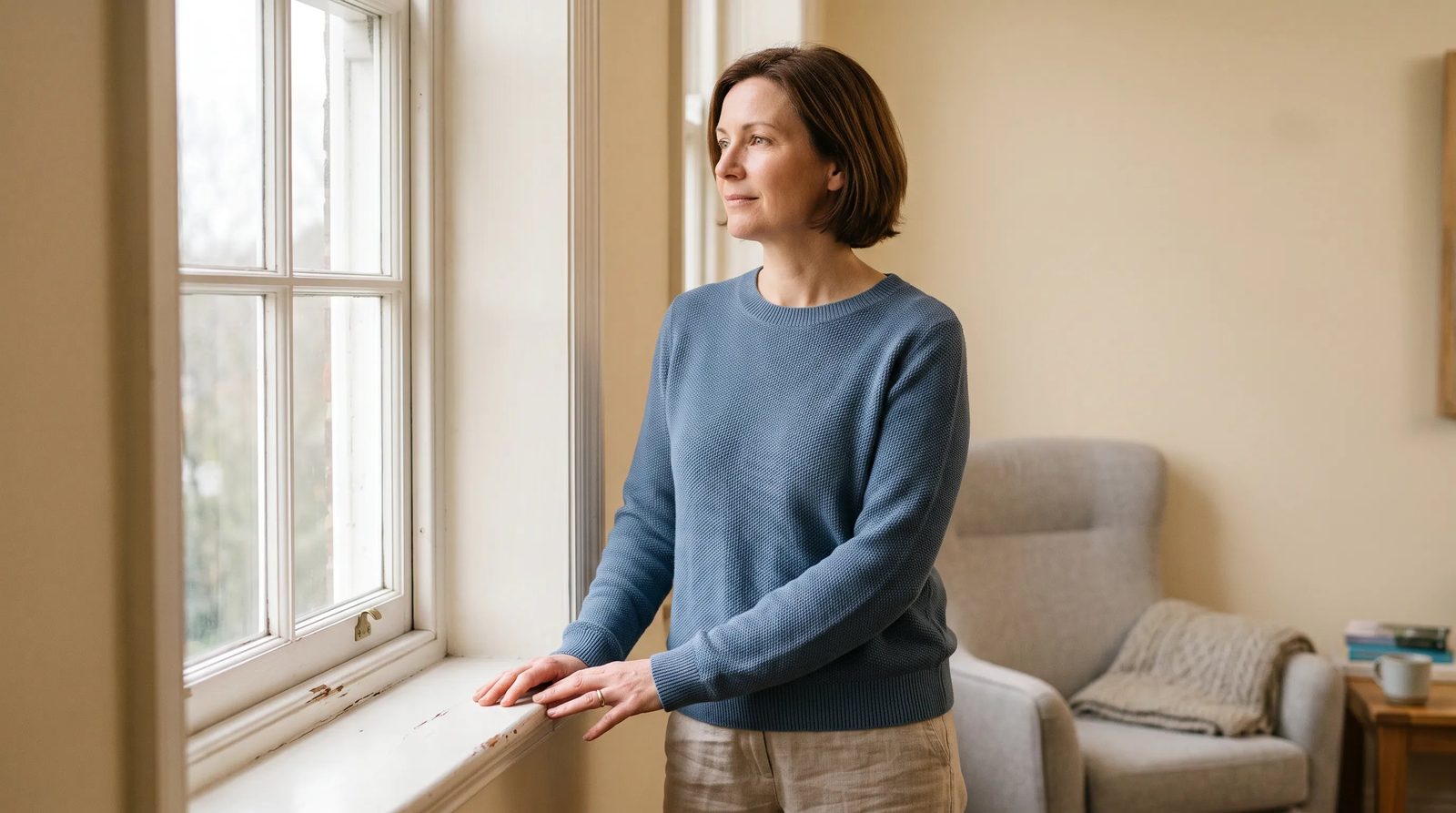
What do you do when a diagnosis lands like the end of a story instead of the start of one? That was where Kristen found herself a couple of years ago, sitting with the news that she had Lyme disease and a head full of worst-case scenarios. She had already put in real work by the time she walked into our Hinsdale clinic. What she describes here is her own experience, in her own words, and it is one story among many rather than a promise of what anyone else will feel.
We share it because Kristen gave us her permission to, and because so many people living with a Lyme diagnosis tell us they feel alone with it. Before the camera started, our founder Sharon Vogel asked the room the question she asks every patient:
"Do I have her permission to take this video?"
Kristen said yes. Here is what she wanted people to know.
What did Kristen try before lymphatic drainage?
Kristen's first response to her diagnosis was fear, and she is candid about it.
"At first when I was diagnosed, I was devastated. I had all these things in my head that it was sort of the end of me."
From there she got to work. She read, she learned, and she built a routine of medical and supportive care around herself. She worked with naturopaths. She paid attention to her diet and added supplements. Over time she found she could keep many of her symptoms at bay, even as some stubborn ones stayed: swollen legs, bloating in her abdomen, puffiness, and the water weight that seemed to settle in and not leave.
Manual lymphatic drainage came late in that search.
"It wasn't until about six months ago that I found lymphatic drainage massage."
That timing matters to how you read the rest of her story. Lymphatic drainage joined a plan Kristen had already built with her own medical providers. It sat alongside that care rather than replacing any part of it.
Was she nervous about her first session?
Yes, and for a specific reason. People managing Lyme sometimes react hard to bodywork, feeling temporarily worse before they feel better, a pattern often called a Herxheimer reaction. Kristen had felt something like it from massage before, so she came in cautious. What reassured her was pace.
"She assured me that she would work at the right pace, and I left feeling better."
That first session went the way she hoped.
"I just felt like all the inflammation and swelling and everything left my body."
Working gently and at the right pace is a deliberate clinical choice, and it is the reason a session with a trained therapist looks so different from a firm rubdown. If you want the fuller picture of what that reaction is and how careful pacing aims to head it off, we cover it in herxing after lymphatic drainage. Kristen's comfort came from one session at a time. She started at about twice a week, and it took several visits to reach the point she describes now.
What did Sharon teach her to do at home?
The part Kristen returns to most is what she learned to do on her own.
"The thing that I really loved about Sharon was that she wanted to teach me things I could do at home for my lymphatic system."
The technique was dry brushing, a light, dry-bristle stroke along the skin that follows the direction the lymph naturally flows.
"She taught me how to dry brush. And now I dry brush every single morning."
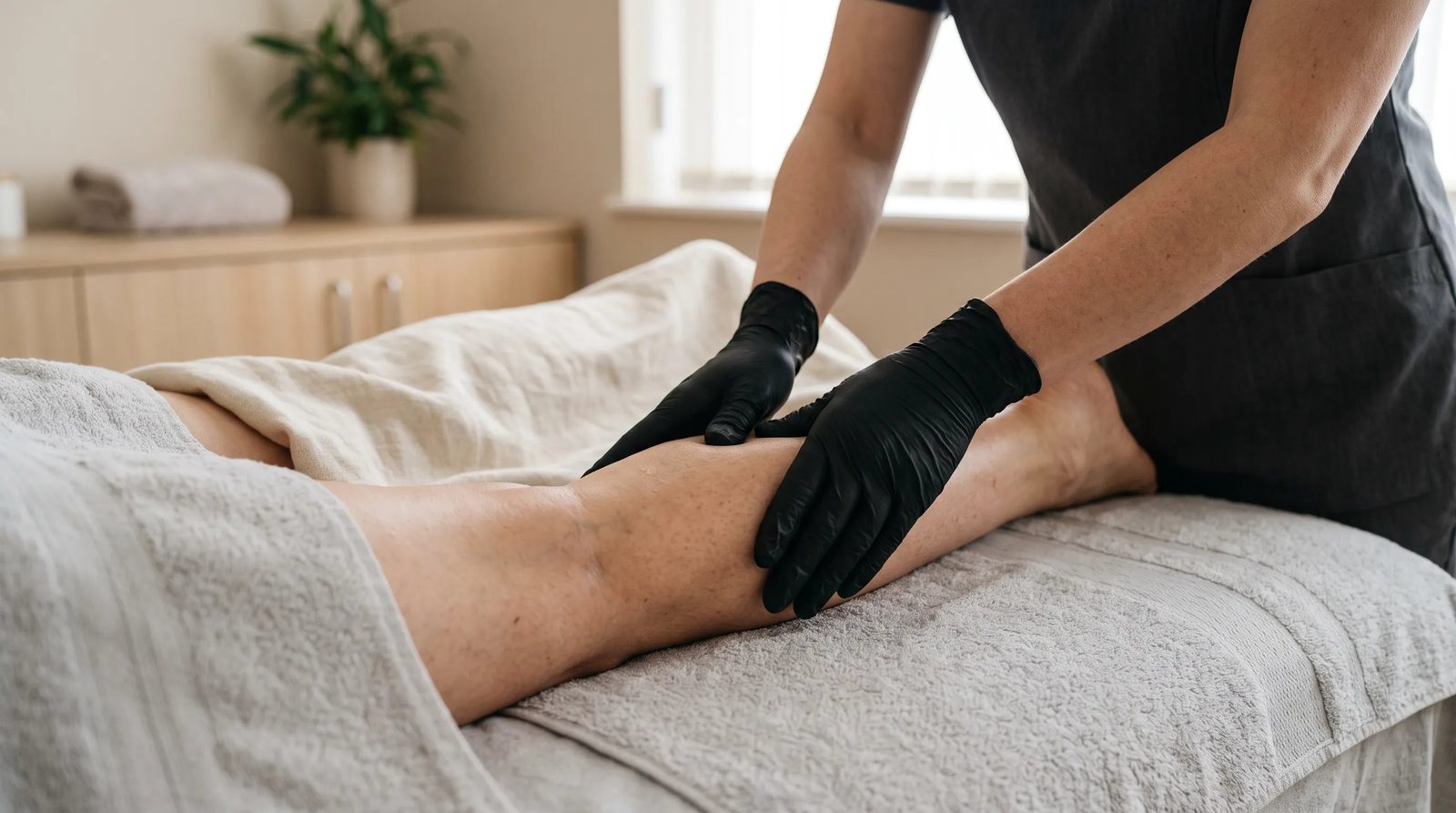
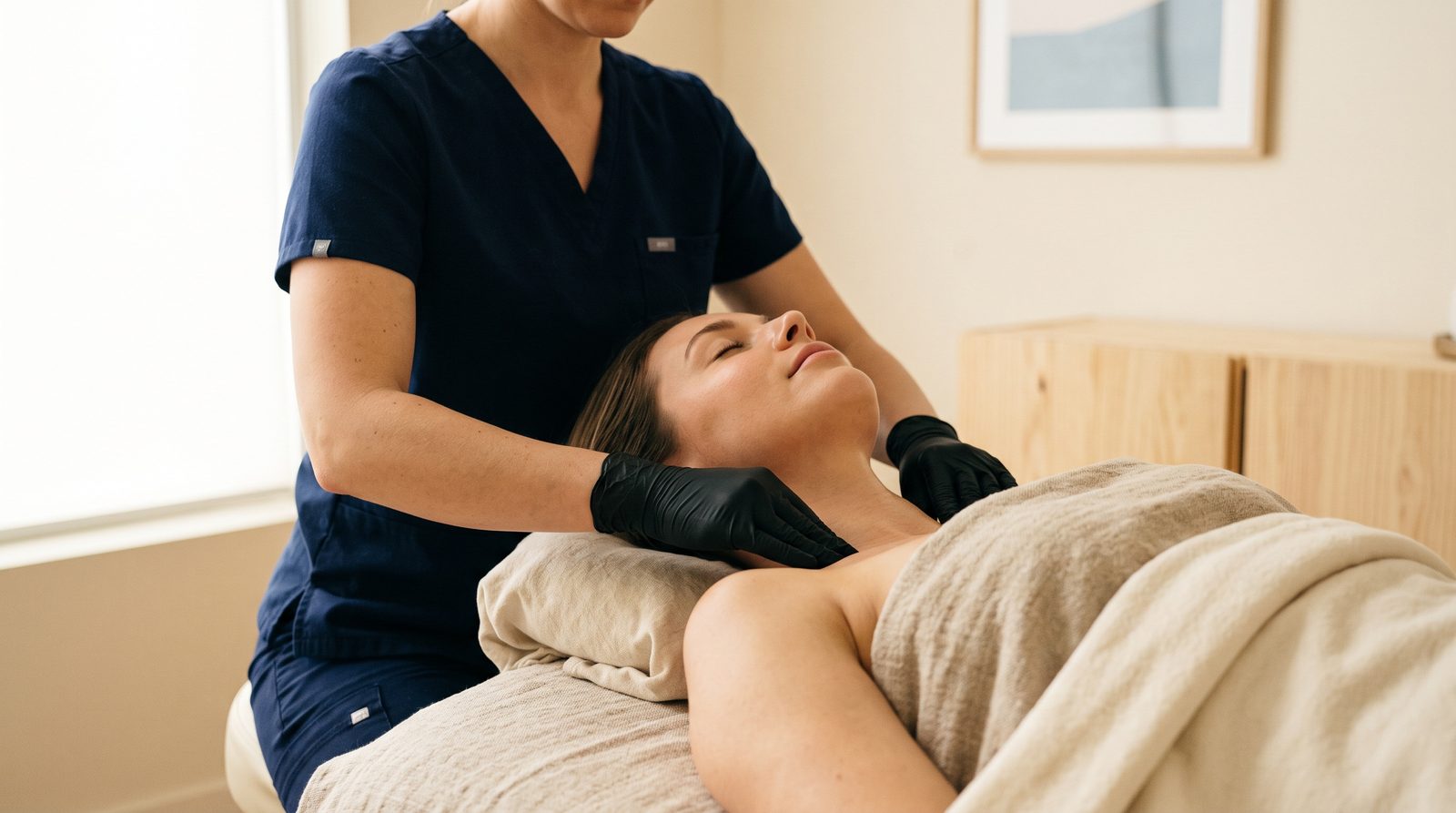
Teaching patients their own homework is a through-line in how Sharon works. The lymphatic system has no pump of its own, so it depends on movement and gentle stimulation to keep fluid heading the right way. A daily habit between visits gives the system a steady, small nudge. You can read more about that mechanism and the hands-on work itself on our manual lymphatic drainage page.
There is a sequence to it, too, which is why this is skilled clinical work. Sharon describes the order plainly:
"First, we want to open the main drain. Then we start to do the lymph drainage."
"There's a whole science behind this. That's why we go to school as CLTs."
How does Kristen describe the difference now?
A few changes stand out to her. The first is her joints.
"I definitely notice that my joint pain has gone down."
She noticed it most around exercise. Where a workout used to leave her achy for a day, the pattern shifted.
"With lymphatic drainage, I barely had achiness."
The line she keeps coming back to is about perspective, the way relief can sneak up on you.
"Sometimes you don't realize how bad you feel until you feel better."
The practical change is her calendar. Between the daily dry brushing and the regular work she could not reach on her own, her visits stretched out.
"I really now only need to come in about once a month."
"The combination of the daily dry brushing and everything that I'm not able to get to has been for me a really great solution."
We want to be careful with that last point. Kristen's schedule is Kristen's. How often anyone benefits from coming in depends on the person and the assessment, and there is genuinely more than one way to approach it.
Where does lymphatic drainage fit alongside medical care for Lyme?
Here honesty matters more than reassurance. Lymphatic drainage is supportive care that helps fluid move and helps many people feel more comfortable. It does not treat or cure Lyme disease, and Kristen's results are her own individual experience. Her recovery was built on medical and naturopathic care she pursued separately, with lymphatic work added as one supportive piece.
Sharon says the same thing to anyone who asks whether this might help them. The first step is a diagnosis from a doctor.
"They should go get diagnosed, get the blood test, figure it out, and then see if this is going to help them."
That order is the point. See your physician first, get clear on what you are dealing with, and then explore whether supportive lymphatic work has a place in your plan. Some conditions call for a physician's involvement before any hands-on work begins, and part of a good assessment is knowing when to say so. If you are managing ongoing swelling from a diagnosed lymphatic condition, our lymphedema therapy page is a better starting point for that specific need.
Kristen closed her visit the way many patients do, by thanking Sharon for teaching her. Sharon turned it right back around, because the learning is the treatment as much as the hands are.
If you are living with a Lyme diagnosis and wondering whether supportive lymphatic work belongs in your plan, tell us what is going on and we will be honest about whether we can help. You can also keep reading through our education library, including the companion piece on herxing after lymphatic drainage.