Partway through her session, Kim reached behind her own back, pressed one side, then the other, and felt the change with her own hands. Two people who live with very different conditions had walked into National Lymphatic Centers carrying the same daily weight: swelling that had started to shape how their days felt. What follows is Kim's story and Joe's story, told mostly in their own words, both shared with their permission. A note before we begin, because honesty matters more than a good story here. Each of these is one person's individual experience. What Kim felt and what Joe found are theirs, and every body and every condition responds differently, so please read these as real accounts rather than a promise of what any one person will feel.
Kim's story: lipedema and lymphedema in her legs
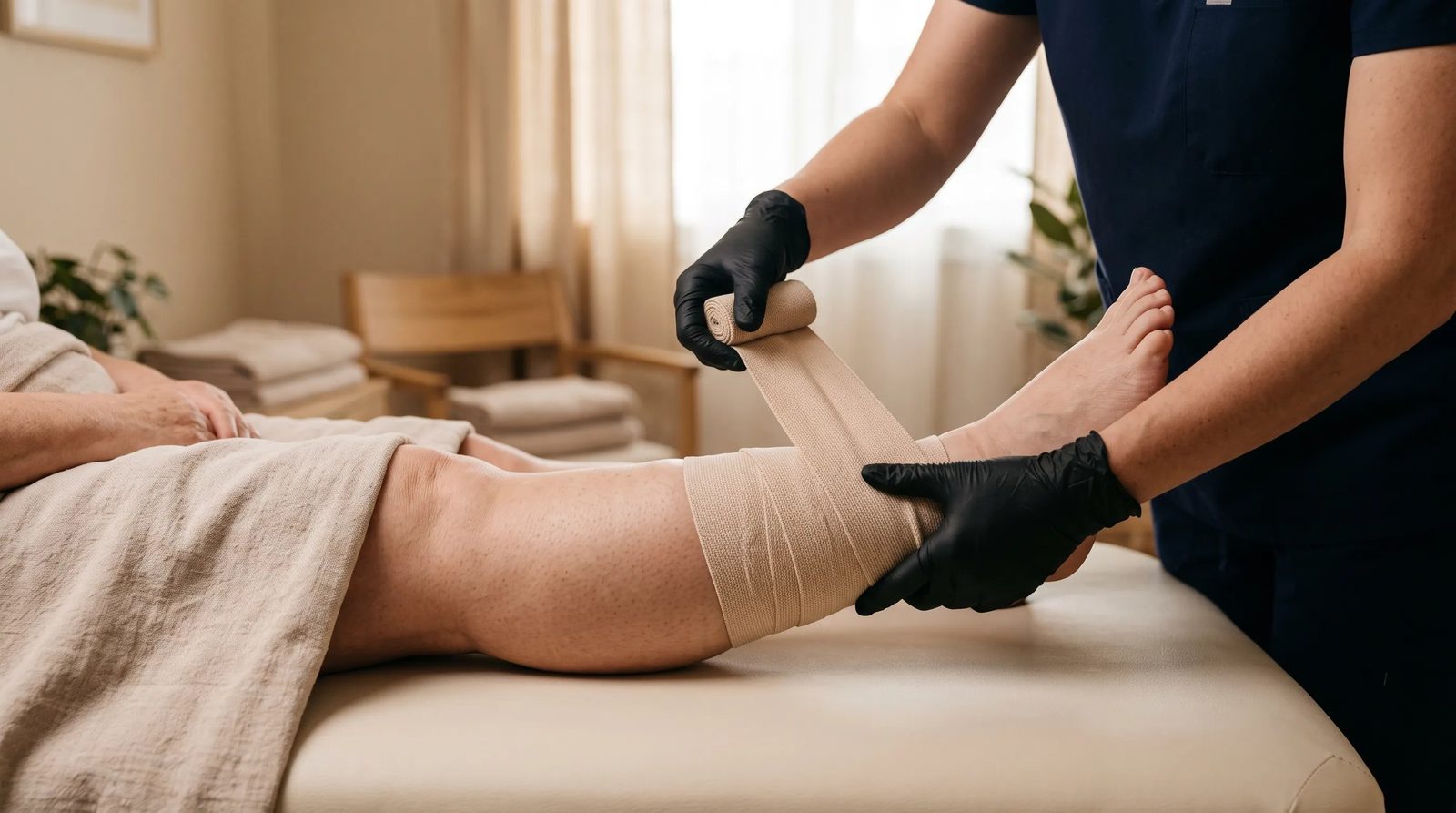
Kim lives with both lipedema and lymphedema in her legs, two conditions that can sit side by side and both leave fluid with nowhere easy to go. She was the one who noticed the change and made the call.
"I could feel the swelling getting worse, and I knew that it was time to get some manual lymphatic drainage."
That instinct, catching a shift early and acting on it, is a large part of living well with a lymphatic condition. When she came in, Sharon had her reach back and feel the treated side against the untreated one. Kim describes that moment plainly:
"You can immediately tell the difference that your massage is doing on my body."
For Kim, the relief arrived quickly and showed up in ordinary ways.
"That pain is gone, and my compression pants went on easier."
A smaller detail like compression garments sliding on more easily can mean a lot day to day, because it is the kind of thing a person notices getting dressed in the morning. We share it here as Kim's own report of how she felt after her session. How quickly any individual notices a change varies widely, which is exactly why we assess each person before we begin rather than expecting one timeline to fit everyone.
What stayed with us most was how Kim framed the care as part of her own routine, something she does for herself.
"It's something that I need in my life, and it's something that I need to do for myself."
Joe's story: lymphedema after radiation
Joe's session opened the way many of ours do, with a question Sharon asks before anything else.
Sharon: "Do we have your permission to use this video?" Joe: "Absolutely."
Consent comes first with us, on camera and in the treatment room, and Joe gave his on both counts. He lives with lymphedema in his legs, and when Sharon asked what caused it, he answered directly.
"It was caused by radiation that I had about a little over a year ago."
This is worth pausing on with care. Lymphedema can develop after certain cancer treatments, including radiation, when the lymphatic pathways in an area are affected. Lymphatic work in a case like Joe's is supportive care that helps fluid move; it does not treat cancer, reverse radiation, or cure the condition itself. Anyone with an oncology history is assessed with that history front and center, and coordinated with their medical team.
Joe had looked for help before he found us, and he described his search in his own words:
"I have gone to four different certified lymphatic practitioners, none of which could accomplish what Sharon has accomplished for me within the matter of a few months."
We share that line because it is Joe's, and it belongs to him. It is his personal experience of his own path, and we present it only as that. It is not a rating of any other clinician's care, and it is not a claim about what results anyone else should expect. Every practitioner and every patient meets a condition differently.
When Sharon asked whether he had found a real change in his body and tissues, Joe pointed to something specific:
"What used to be thick ankles, thick legs, no matter if I used the compression stockings or not. It was the massaging, the special massaging that was done by Sharon, that was just great."
For ongoing lymphedema, that hands-on work often sits alongside other pieces of care, from compression to skin care to sequenced decongestion. Our complete decongestive therapy page walks through how those parts fit together, and our lymphedema therapy page is the place to start if you are managing swelling from a diagnosed condition.
What Kim's and Joe's stories have in common
Two different conditions, two different bodies, and yet a few threads run through both. Each person noticed something in their own body and decided to act on it. Each was assessed and treated as an individual, because there is no single routine that fits every lymphatic condition. And each describes gentle, hands-on lymphatic work as the thing that moved fluid that had been sitting still.
It also helps to be clear about what this work is. Manual lymphatic drainage is supportive care that helps fluid move and helps tissue feel lighter and more comfortable. It is a genuine clinical skill, and it works best as part of a wider plan for a condition like lymphedema or lipedema. Some situations call for a physician first, and certain conditions, including some heart and lung problems, blood clots, and active infections, need medical involvement before any lymphatic work begins. Severe lymphedema belongs in a hospital lymphedema clinic where emergency care is on hand. When we assess someone, this comes before anything else, and we will always tell you honestly whether this work is a good fit for you.
Kim and Joe arrived with real conditions and left describing real, personal relief. Their stories are theirs alone, offered here so you can hear what living with lymphedema and lipedema can sound like from the people going through it.
If any of this sounds like your own swelling or recovery, tell us what is going on and we will say honestly whether this work can help. You can book a consultation through our online booking page, or keep reading in our education library to learn more about how the lymphatic system works and how we work with it.