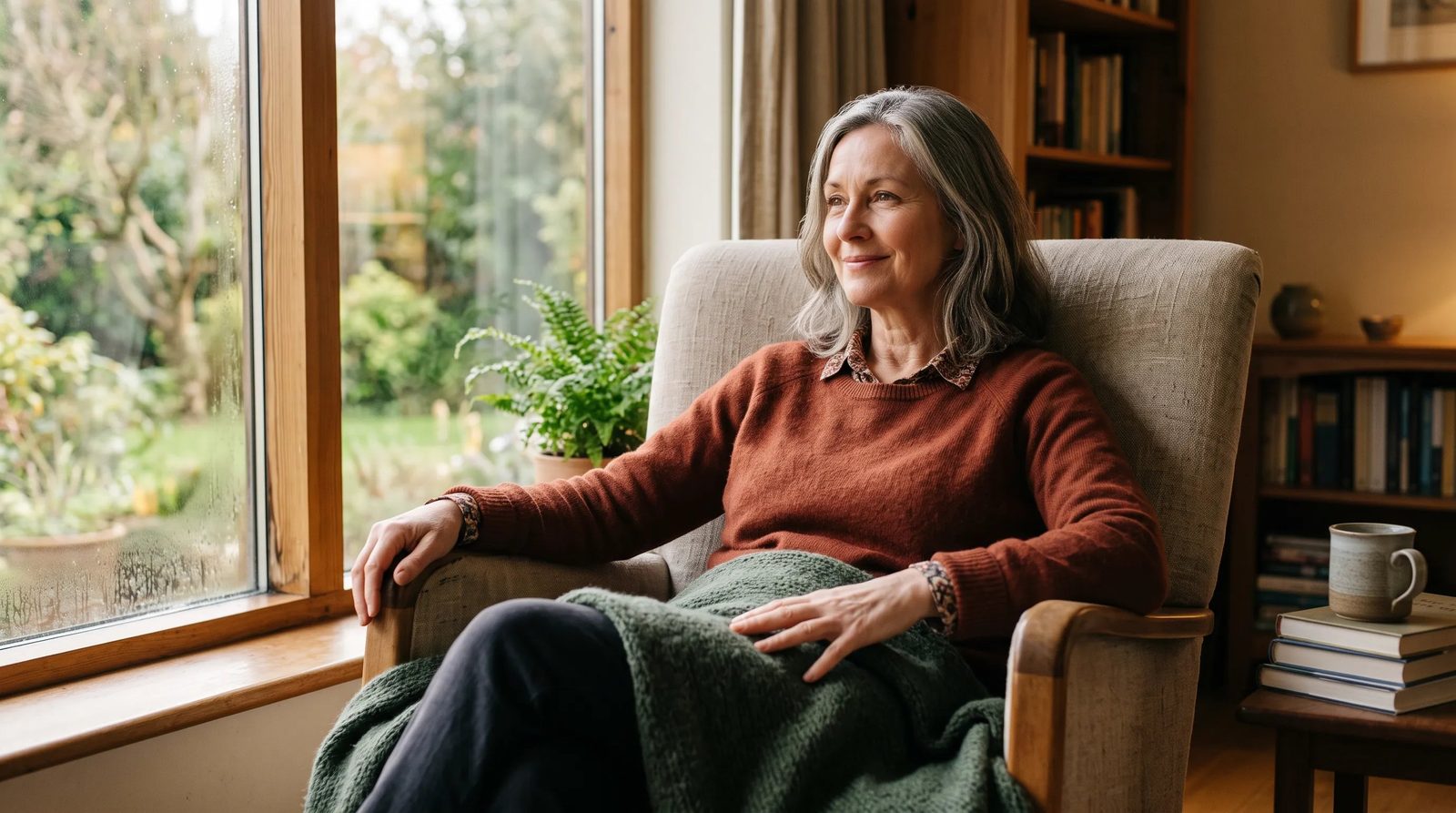
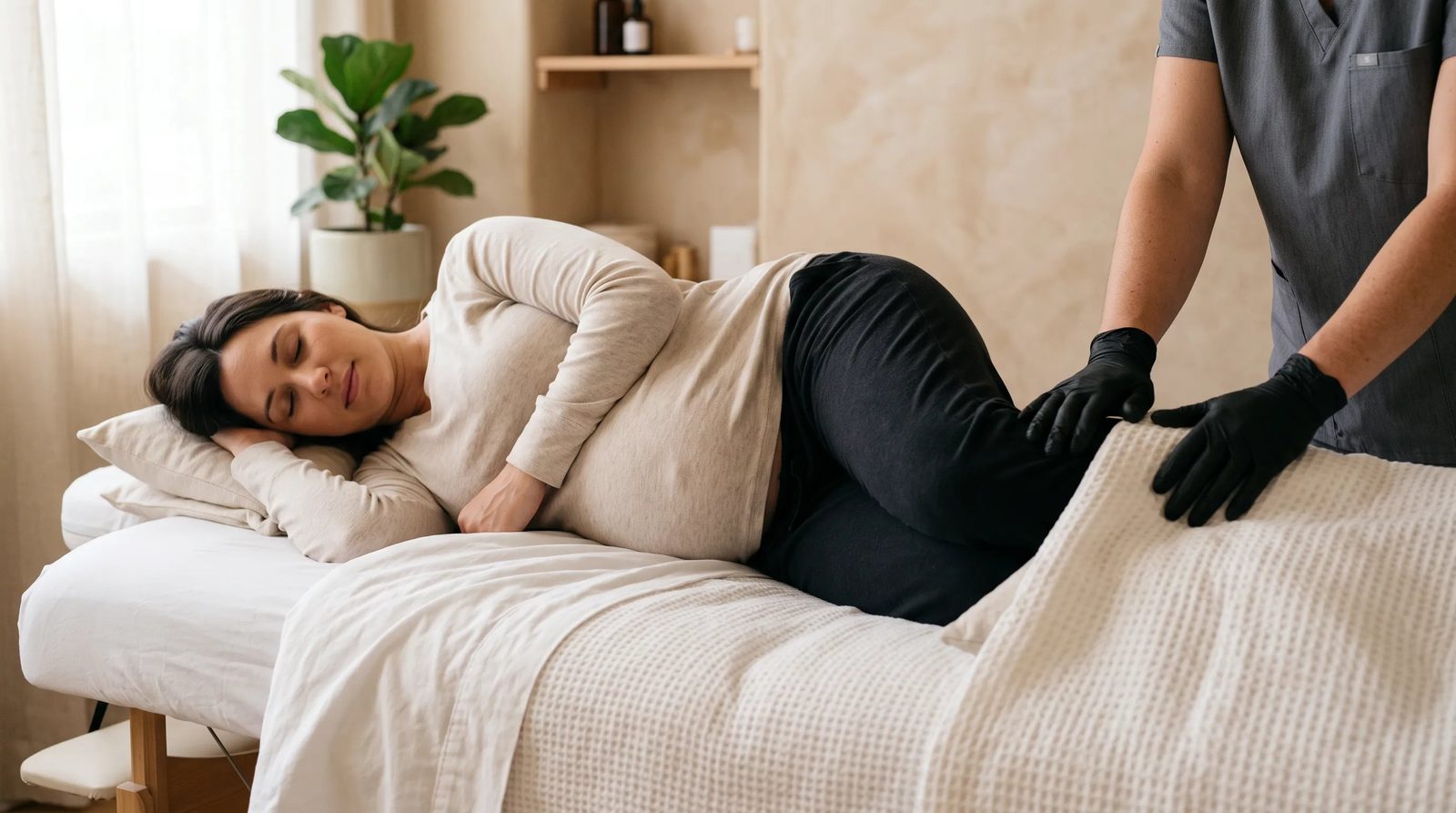
By her third pregnancy, Jessica thought she had seen it all. Two babies already, two very different nine-month stretches, and a good sense of what her body did along the way. This time was a surprise in more ways than one. The pregnancy itself was unexpected, she was a little older than before, and her body responded in a way it never had. Her ankles swelled. Walking got hard. And she found herself in a chair at National Lymphatic Centers, talking through what had brought her in.
What was actually happening with the swelling?
Here is how she described it, in her own words:
"I am a third time mom. This was a kind of a surprise baby for us and I'm a little older. So I never had these issues before."
This is her story, told the way she told it on camera. It is one person's experience of late-pregnancy swelling and the relief she felt from lymphatic drainage. Every pregnancy is different, and what helped Jessica may not be right for someone else. We are sharing it because it is honest, and because it opens a door to a question a lot of expecting mothers quietly carry: is swollen, uncomfortable, hard-to-walk-on swelling just something you have to wait out?
Some fluid buildup in pregnancy is common and expected. The body carries more blood and more fluid than usual, and a growing uterus puts pressure on the veins that carry blood back up from the legs. Gravity does the rest. By the third trimester, many women notice puffy ankles and feet by the end of the day. That is normal territory, and your obstetrician or midwife is always the right person to tell you what is normal for you.
For Jessica, it had gone past uncomfortable:
"I'm just having a lot of swelling and swollen ankles and discomfort and it was to the point where I just couldn't walk almost. I was having so much pain."
Swelling that limits how you move, or that comes on suddenly, is exactly the kind of thing to raise with your doctor first. That is not a formality. Sudden or severe swelling can sometimes signal something that needs medical attention during pregnancy, and only your care team can sort the ordinary from the concerning. What we can speak to is the comfort side: the heaviness, the tight ankles, the feeling of fluid sitting in the tissue with nowhere to go.
Why we ask prenatal clients for a doctor's script
Before we get to how the work felt, it is worth explaining a step that happens before any prenatal session begins, because it is a big part of how we keep this safe.
For pregnant clients, we ask for a script from your physician. We are standalone practitioners, so we are not required to have one. We ask anyway. Our founder, Sharon Vogel, puts it plainly in her talks about prescriptions:
"If you're prenatal, we ask for a script. We don't need it, but we want the doctor to know everything that you're having done."
The point of the script is communication. It means your doctor knows you are receiving lymphatic drainage, has weighed in, and stays in the loop on your care. When your obstetrician and your therapist are on the same page, everyone is working from the same information. That is the whole idea behind the ask. Your doctor leads, and we support.
What the sessions were like
Jessica came in for the first time the week before this conversation. By her own account, the change stood out to her right away:
"I came last week for my first visit and the difference was phenomenal."
She was careful to describe what the work actually is, and it is a distinction we hear a lot:
"It's not just a massage. She's just draining everything."
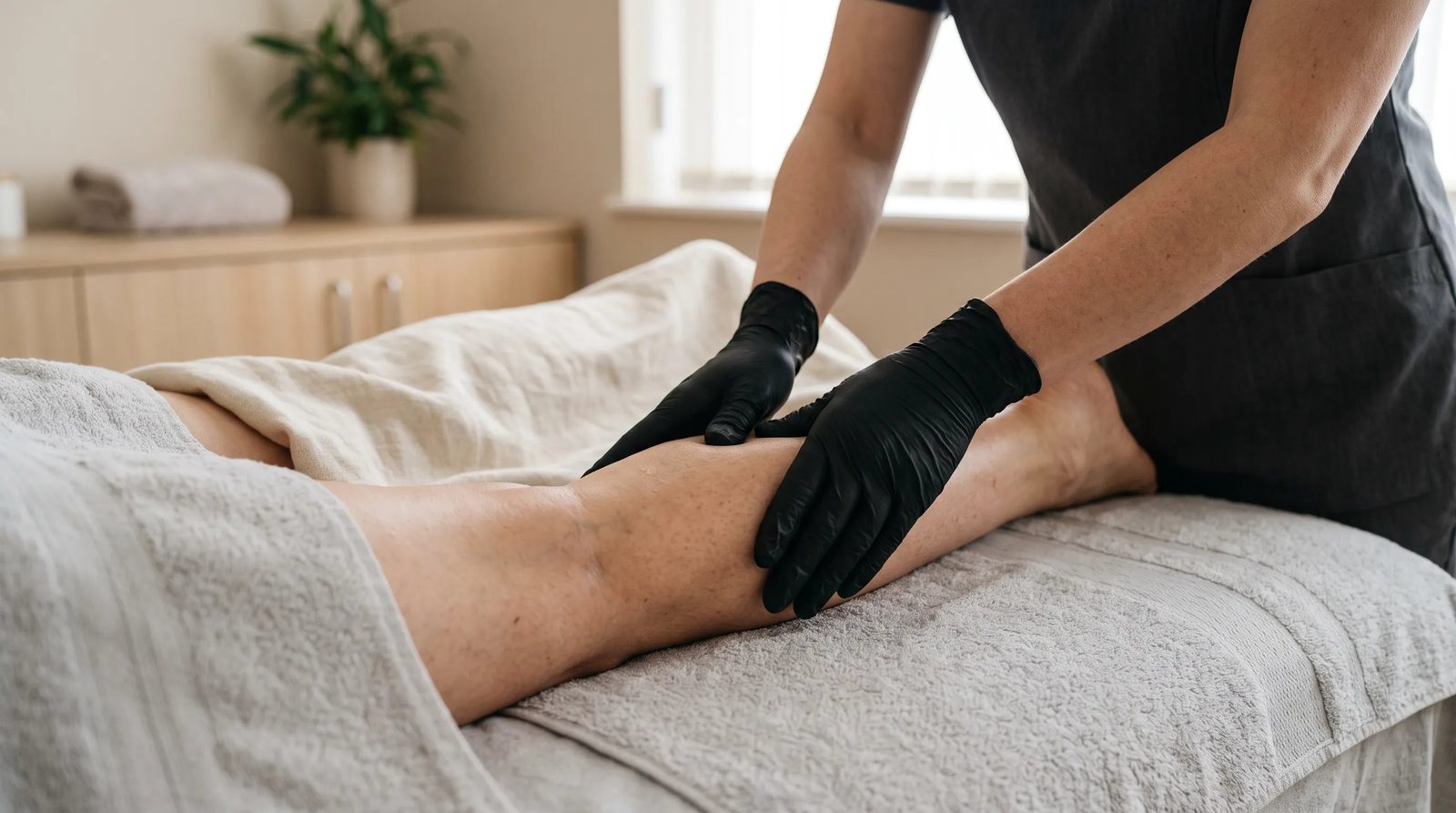
That instinct matches how the technique works. Manual lymphatic drainage (MLD) is a light, rhythmic, skin-level technique. It is a world away from a deep-tissue rubdown. Sharon describes the mechanism this way:
"It siphons and draws fluid. It does not push fluid around. It doesn't squeeze swelling."
That gentleness matters even more during pregnancy, when comfort and a calm nervous system are the whole goal. The work is meant to feel soothing while it encourages fluid that has pooled in the tissue to start moving back toward where the body can process it.
For Jessica, the practical result was the part she kept coming back to:
"My ankles went from this to this."
"I can fit in my shoes. I'm comfortable. I can make it through the week."
Fitting back into her shoes and getting through the week is a modest, human kind of win, and it is exactly the kind of comfort this supportive work aims for. It offers relief for how the swelling feels while the body does its own work.
An honest word on what this work can do
Because this is a patient story, it is worth being clear about its limits. Jessica's results are hers. Swelling responds differently for different people, some conditions during pregnancy need a physician's care first, and lymphatic drainage is supportive comfort care that will not cure anything. This is also why we start every prenatal client with that conversation about a script, and why we defer to your doctor on what is safe for you.
What we can offer is careful, gentle, screened support for the discomfort of fluid buildup, delivered by therapists who work with the lymphatic system every day. There is no single routine that fits everyone. As Sharon often says, everyone is different, and the work is assessed for the person in the chair.
Jessica summed up her own experience in a way we will let stand on its own:
"It's just been a huge blessing to have been able to come here and help me with my pregnancy journey."
Where to go from here
If you are pregnant and dealing with swelling that is wearing you down, the first step is a conversation with your own doctor. If lymphatic support sounds like it could help with the comfort side, our prenatal massage page walks through how we care for expecting mothers, and our postpartum massage page covers the weeks after the baby arrives. To understand the technique itself, our manual lymphatic drainage page explains how the work is done and why it feels the way it does.
When you are ready, tell us what is going on and we will talk it through honestly, including the doctor's-script step for prenatal care. You can also keep reading through our education library for more patient stories and plain-language guides.