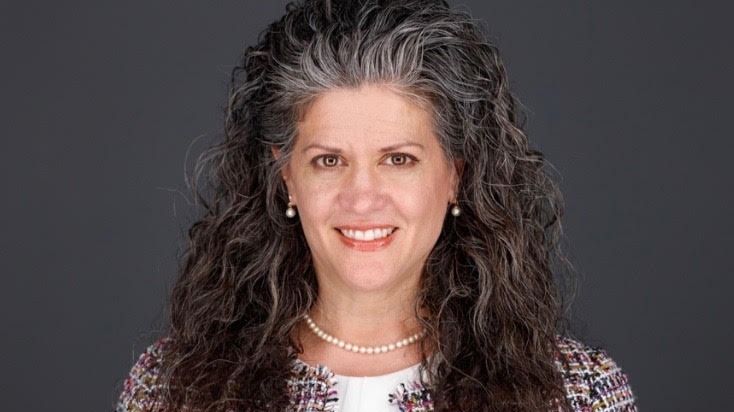
What can a lifetime spent moving lymphatic fluid teach you about staying well? In 2021, Natural Awakenings Chicago put that question to Sharon Vogel for its Women in Wellness series, and her answers are a good place to begin if this work is new to you. Sharon is the founder of National Lymphatic Centers, and the conversation covered the ground most people ask about first. What the lymphatic system is. Who lymphatic drainage actually helps. And the small daily habits that keep fluid moving between visits. This article follows the through-line of that interview, using Sharon Vogel's own words on lymphatic drainage with our framing around them.
Who is Sharon Vogel?
Sharon traces this work back to when she was five years old. Her mother was a surgical nurse who spent long days on her feet, and her legs would fill with fluid by the time she got home. Young Sharon was allowed to play with her mother's little bathroom towels and perfumes on one condition: that she massaged her mother's feet first. A child's hands can only do one thing, and it turned out to be exactly the right thing.
"When you're five years old all you have is a feather touch, a very light touch. And that is manual lymphatic drainage."
That early, accidental apprenticeship became a career. Today Sharon has more than three decades of hands-on experience and founded National Lymphatic Centers in 1991. She developed the Vogel Method of manual lymphatic drainage and trains NLC staff and other licensed therapists in the technique through CEU education at the Vogel Institute of Lymphology. You can read the fuller version of her story on our about page.
What is lymphatic drainage, in Sharon's words?
Sharon has a gift for making the physiology plain, and her favorite picture is a kitchen sink. Clean water in, waste water out, everything kept flowing.
"It's kind of like when you're doing your dishes. You turn the water on and it's clean water, then you do the dishes, that same water is now waste water and then it goes down the drain. So we make sure the fluid can get in and get out."
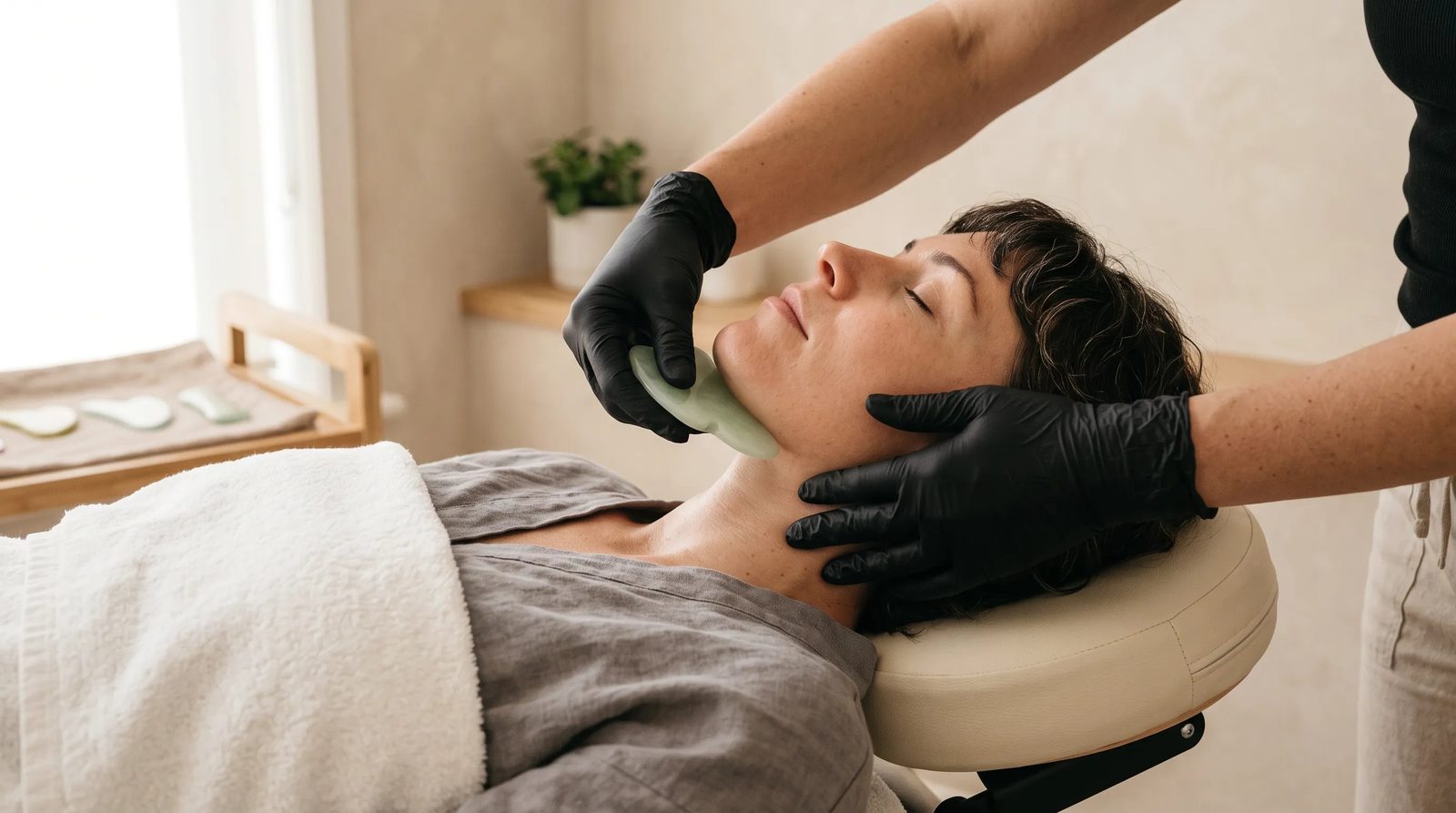
The touch itself is far lighter than most people expect, because the system she is working with sits so close to the surface.
"The lymphatic system, the network, is one millimeter below the surface of the skin. It's right there. It's a little stretch release technique."
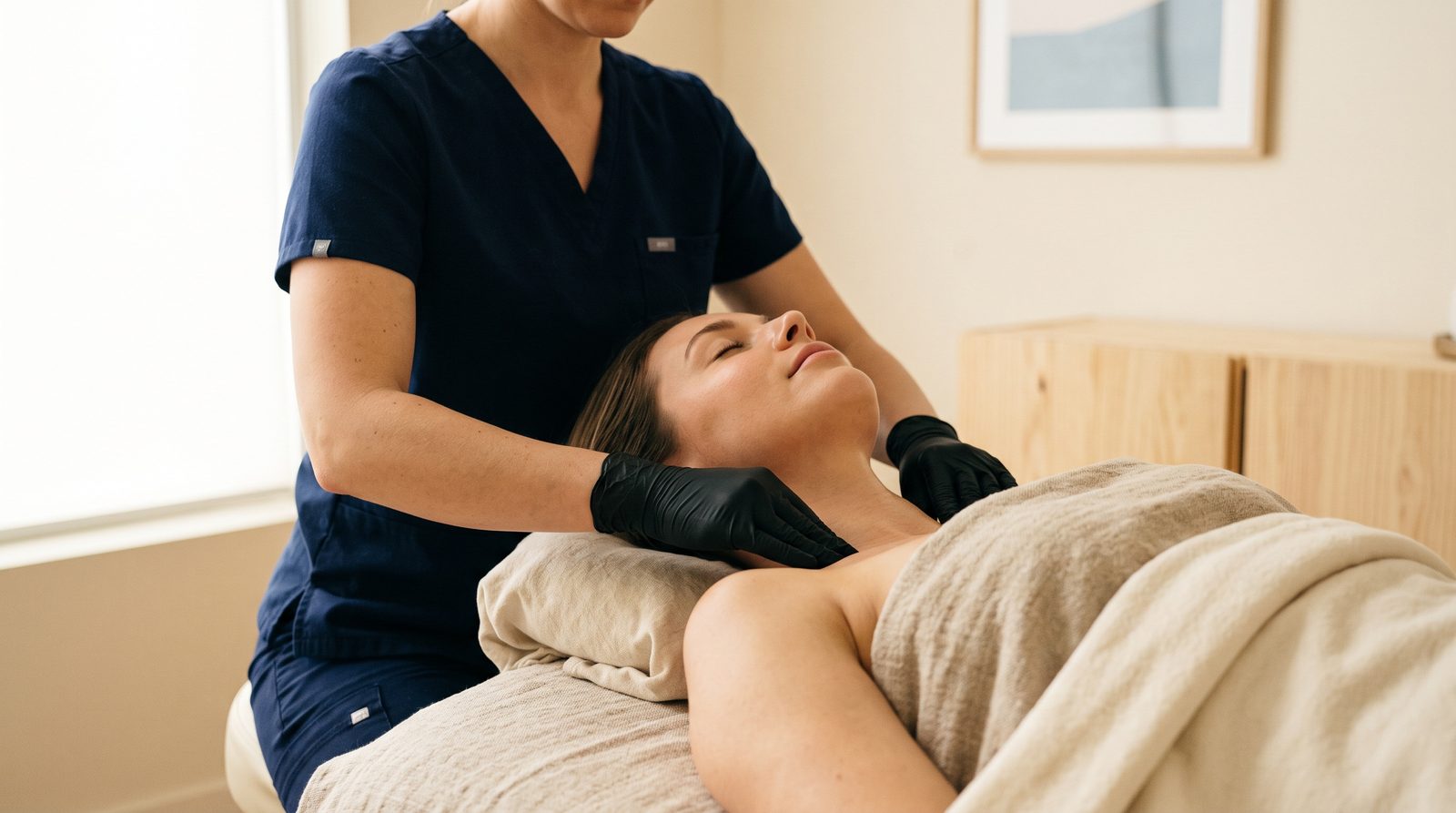
That is the reason good lymphatic work feels gentle and rhythmic rather than deep and forceful. It works with a network that lives just under the skin, so it stays at skin level. Our manual lymphatic drainage page walks through what a full session involves.
Who is lymphatic drainage for?
One of the warmest moments in the interview comes when the host asks whether this is really for everyone. Sharon's answer is quick and generous.
"It's good for babies, mamas and grandmas, everyone."
She has a special fondness for the everyday swelling that so many people carry, especially women managing puffy ankles, long days on their feet, or the changes that come with pregnancy and recovery.
"Sometimes we're just puffy creatures and we need to move the fluid."
Much of her clinical work is more involved than that, of course. Many of her patients come before or after surgery, or while managing an ongoing condition, and this kind of support helps the body move the extra fluid that gathers while it heals. It is supportive care that helps fluid move, and it does not cure any medical condition. It is not right for everyone. Some situations, including certain heart and lung conditions, blood clots, and active infections, need a physician first, and severe cases belong in a hospital lymphedema clinic where emergency care is on hand. Sharon assesses for all of this before any hands-on work begins.
What makes the Vogel Method different?
When the host asks what sets her approach apart, Sharon describes a deliberate order of operations rather than a single generic technique. She opens the roadblocks first, softens any fluid that has hardened and stalled, and only then guides it back into circulation along the pathways the body already has. Sequencing matters, and doing it in the right order is what keeps the work both effective and safe.
That order is also why she treats this as serious clinical work. She built the method over decades, trademarked it, and now teaches it to interns and fellow practitioners for continuing education. Other therapists, nurses, and physicians send their harder cases her way. If you want the step-by-step of how the approach is structured, our Vogel Method page lays it out.
What can you do between visits?
Sharon sends every patient home with homework, because the system responds to simple, consistent movement. Her most repeated tip is about direction. Everything drains toward one place.
"All the fluid in the body drains underneath your clavicle, so you want to bring all the fluid to the clavicle."
In practice that means long, gentle strokes toward the collarbone when you dry brush, bathe, or put on lotion, rather than small circles. Work it into a routine you already do and you have helped your system along without adding a single extra minute to your day. She pairs that with plain advice about what you put in your body.
"Eat foods that are still alive, so less processed foods."
Underneath the practical tips is the philosophy that runs through the whole interview, one of preparation and quiet self-attention.
"Your body is your baby. Take care of your body, listen to your body, and prepare to be well."
Or, as she puts it more simply:
"I always tell people to get ready to feel better."
Keep exploring
This conversation first appeared in Natural Awakenings Chicago, and you can find more of Sharon's interviews and appearances on our in the media page. To keep learning about how the system works and who this care is for, browse the rest of our education library.
If you have a question about your own swelling or recovery, tell us what is going on and we will say honestly whether this work can help.