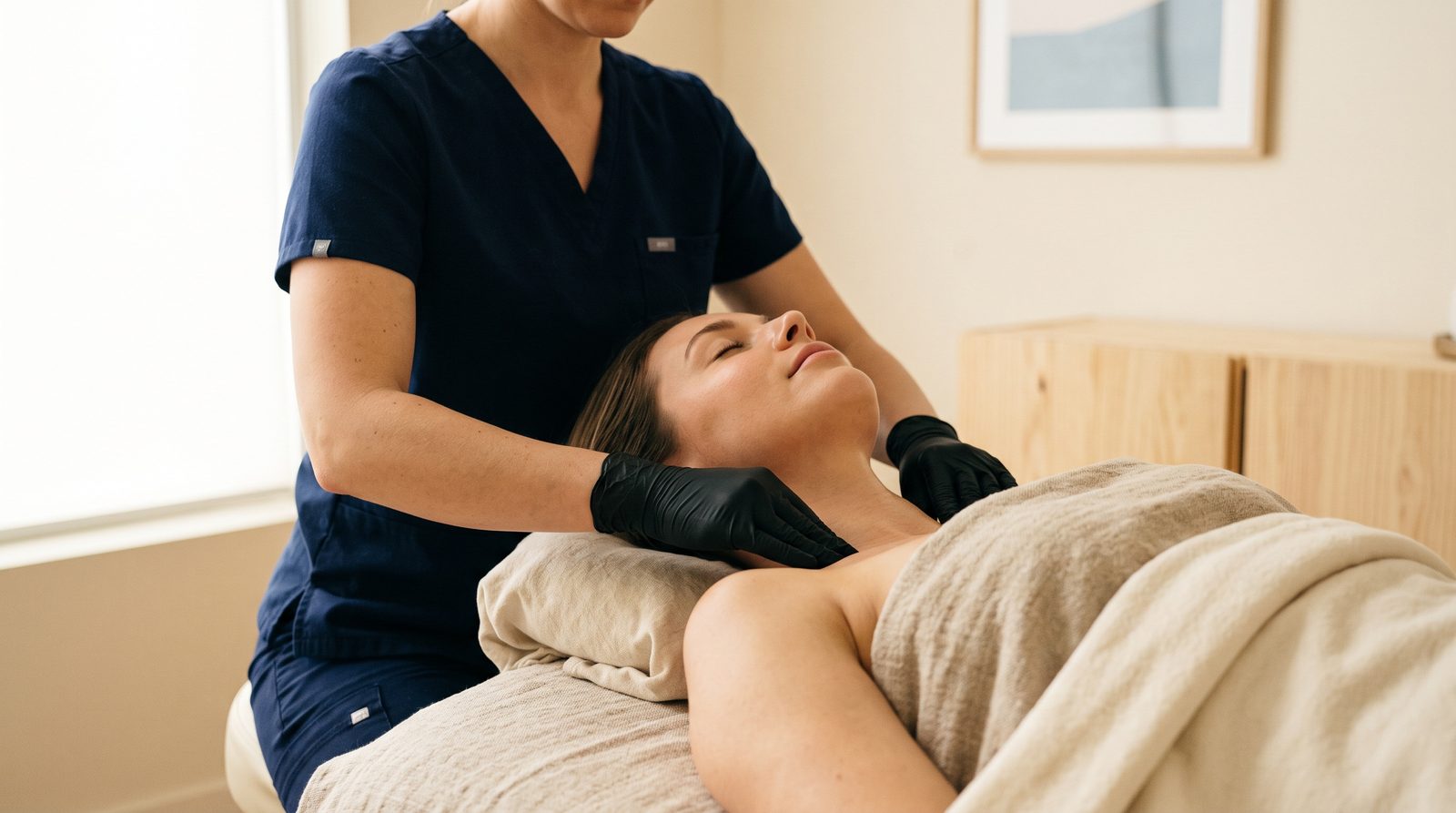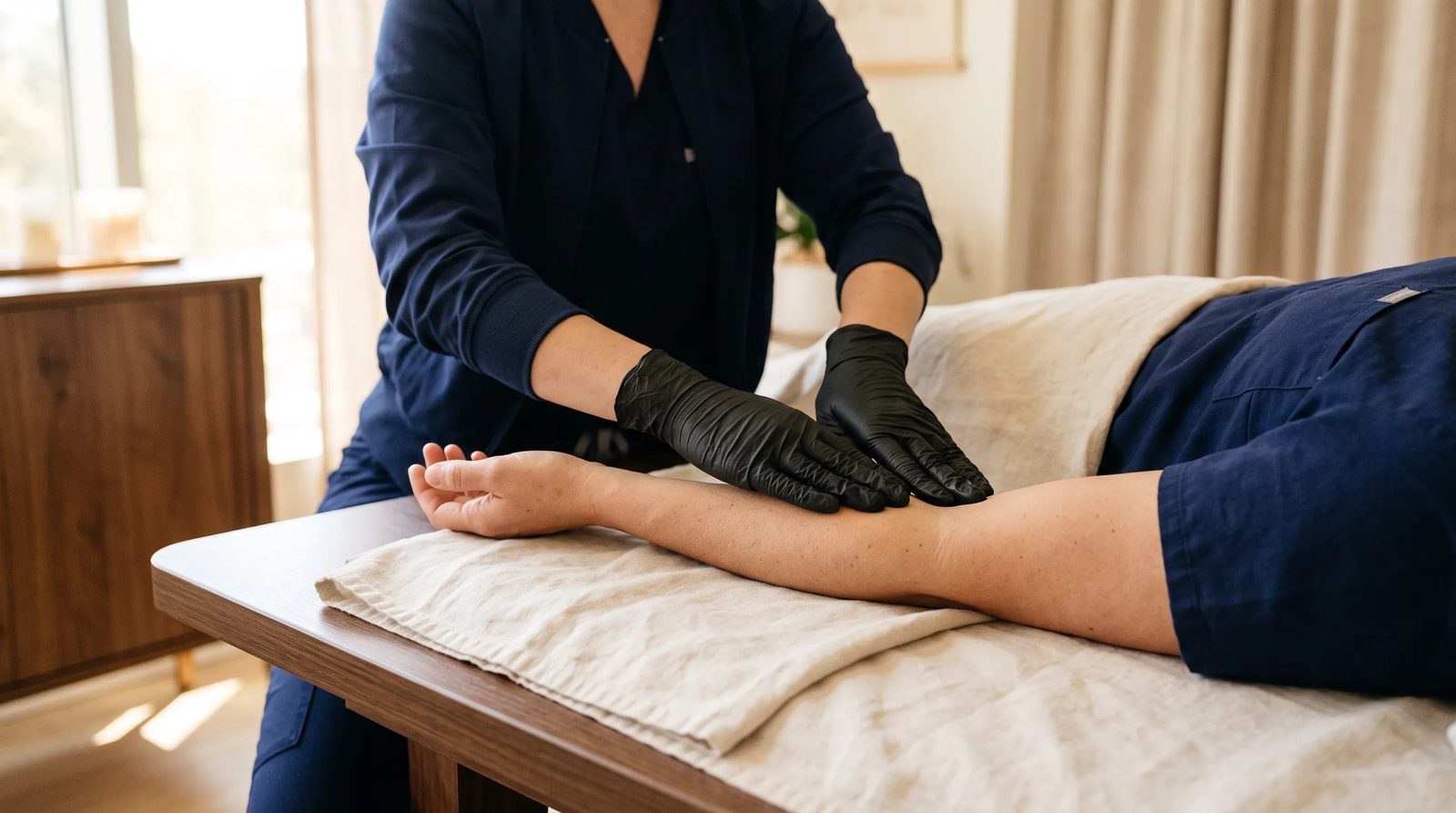
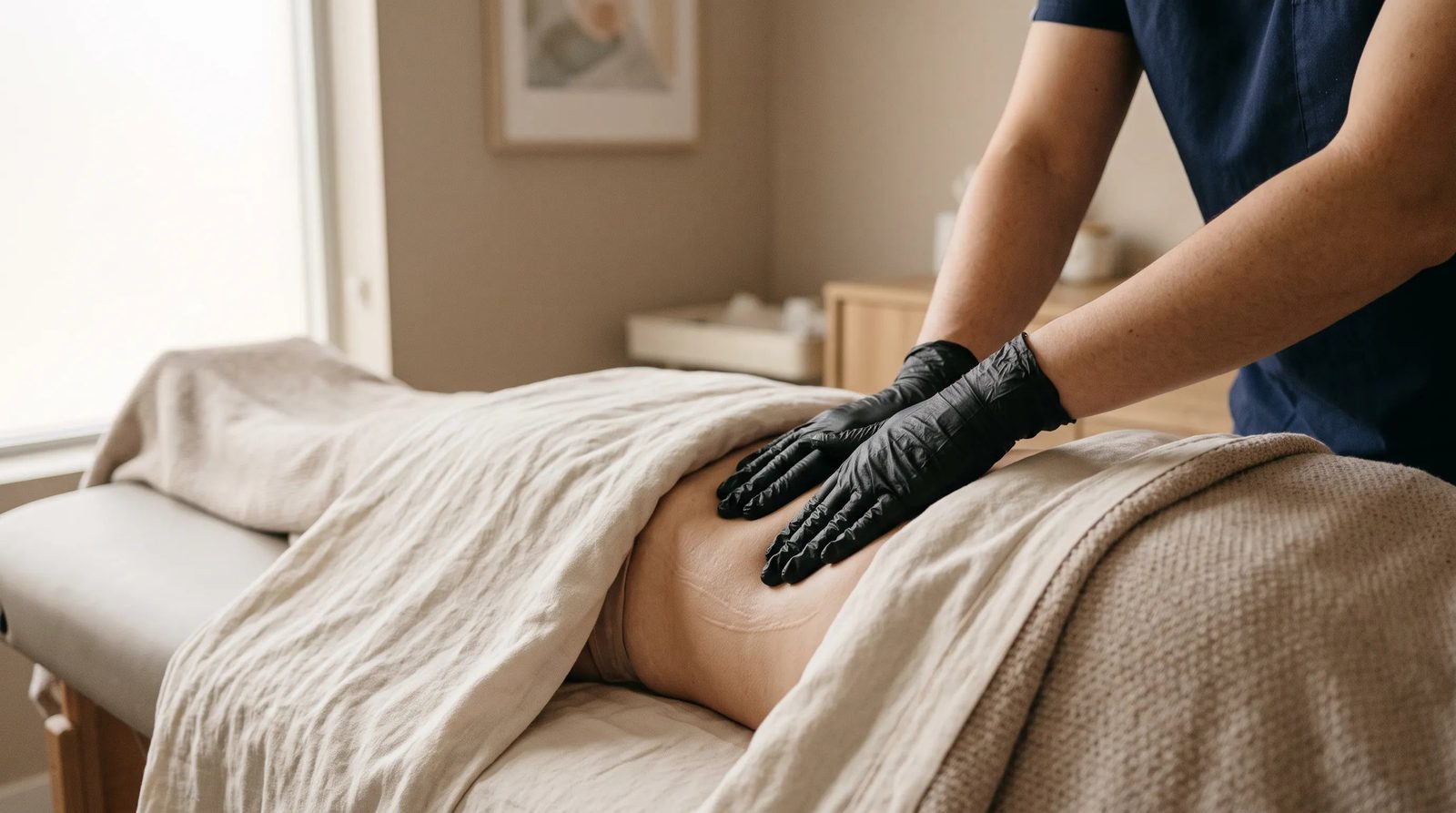
The surgery went well. The surgeon is pleased. And yet a couple of weeks later the swelling is still there, clothes feel tight, and the body feels heavy and sore in a way nobody quite prepared you for. For a lot of people, that stretch of recovery is the hardest part to sit through. Post-surgical swelling is a normal stage of healing. A procedure leaves extra fluid in the tissues while the body repairs itself, and moving that fluid back out is exactly the job of your lymphatic system. When the system needs a hand keeping pace, gentle manual lymphatic drainage (MLD) can support the process. Below are two patients describing what that support felt like for them, framed by one question our founder, Sharon Vogel, hears from nearly everyone who books after an operation.
How soon after surgery can I start?
Sharon opens her answer with the honest part:
"It's different. It depends on the surgeon's protocol and their idea of things."
The timing follows the procedure and your surgeon's clearance, and it varies from one person to the next. For liposuction, she describes seeing patients fairly early in the process:
"You'll see us five days after post lipo."
For a tummy tuck, she gives the tissue a little more room, and she explains why the window has an outer edge:
"If it's abdominal plasty, I would say about a week to 10 days, maybe two weeks. At two weeks though, you're going to start getting hard. So, probably 10 days."
After a more serious operation, the pace slows down on purpose, so the body can settle before any hands-on work begins:
"If it's been something very serious like oncology and mastectomy, let's wait. Let's wait two weeks. Let's get you rested, calm, and then we'll start the lymph drainage to help you feel better right away."
The thread running through all of it is that every recovery is its own. Your surgeon's post-operative instructions lead, and we coordinate our care around them (Sharon asks that your surgeon's post-op self-care papers come over before a first session). If you want to see how the hands-on work is done, our manual lymphatic drainage page walks through the technique itself.
Diane's story: after abdominoplasty and Lipo 360
Diane came to us after two procedures, referred by a friend who had been a patient herself. In her own words:
"So, I've had abdominal plasty and lipo 360."
By her third or fourth visit she had found a rhythm, and what she describes most is how each session left her feeling:
"Every time I come, I feel refreshed, rejuvenated, a lot less swollen."
She is also candid that recovery is a process that unfolds over time. That honesty is worth keeping in view:
"The swelling does come back a little bit, but it's an ongoing thing."
One of the things she valued was learning to carry a little of the work home between appointments. Her therapist taught her some gentle self-massage and pointed her to the few simple items she needed to keep it up on her own:
"She taught me how to do some of the massages at home and what items I need to do them at home, and has brought me lots and lots of relief."
Diane is describing one person's experience, and what any individual feels will differ from patient to patient. If you are healing from liposuction and starting to notice firm or uneven areas as the swelling settles, our fibrosis after liposuction page covers how we approach that kind of hardened tissue.
Jonathan's story: recovery after surgery and injury
Jonathan arrived after a much longer road. He had been through several operations and a whole sequence of other treatments without getting where he wanted to be:
"I had gone through several surgeries and wasn't having any success with anything."
"I had pretty much exhausted every option, trying different types of massage and different treatments, physical therapies, and nothing was working."
He is frank about how limited things had become. His orthopedic doctor had told him that to throw a ball with his son in the backyard, he would need to learn to throw left-handed. Over his course of care, he found room to move again:
"Over the course of the treatment she not only helped fix that, but now I live pretty much almost completely pain-free."
What stayed with him, in his telling, was as much about how the care felt as about the swelling itself:
"Everybody's always very friendly and very helpful, and you always feel comfortable here. You always feel like you're going to be taken care of. You're not a number. They have your best interest and your well-being at hand."
Jonathan's recovery is his own, and the lymphatic work was one supportive piece of a bigger picture that included his own medical team.
What these stories share
Two very different surgeries, two different bodies, and one common thread: steady, gentle lymphatic drainage gave the healing process somewhere to go. Both patients also reach for something past the swelling itself, the plain feeling of being looked after and being taught to look after themselves at home.
A word on honesty, because it carries more weight here than reassurance does. Manual lymphatic drainage is supportive care that helps fluid move while you heal. It works alongside your surgeon's plan and does not cure any condition. Some situations, including active infection, blood clots, and certain heart and lung conditions, need a physician's care first, and we refer those cases on before doing anything else. You can read more about the service on our post-surgical lymphatic massage page.
If your own recovery has stalled and you are wondering whether this kind of work could help you, tell us what is going on through our online booking page and we will give you an honest answer. You can also keep reading through our education library to learn more about how the lymphatic system carries you through healing.